Quotessence
Home / Quotes / Quote by Daisaku Ikeda

Quote by Daisaku Ikeda

“The institutions of human society treat us as parts of a machine. They assign us ranks and place considerable pressure upon us to fulfill defined roles. We need something to help us restore our lost and distorted humanity. Each of us has feelings that have been suppressed and have built up inside. There is a voiceless cry resting in the depths of our souls, waiting for expression. Art gives the soul's feelings voice and form.”

Quote by Daisaku Ikeda

Author
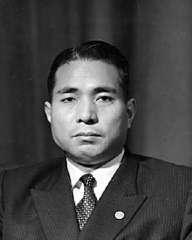
Daisaku Ikeda
Daisaku Ikeda

Daisaku Ikeda, born on January 2, 1928, is a renowned Japanese educator, philosopher, and writer. He served as the president of the Soka Gakkai and is currently the honorary president. Ikeda is dedicated to promoting peace, education, and cultural activities, making significant contributions to global peace and development. more

You May Also Like

“How aware are we of our own inner life, our spirituality-something so intangible yet so priceless? How much effort do we make to perceive that which is not obvious, which can neither be seen nor heard? I believe the exploration and enrichment of the human spirit is what determines our very humanity. Such enrichment provides an inner compass that can lead civilizations to greatness.”

“Every time we killed a thousand Bugs at a cost of one M.I. it was a net victory for the Bugs. We were learning, expensively, just how efficient a total communism can be when used by a people actually adapted to it by evolution; the Bug commisars didn't care any more about expending soldiers than we cared about expending ammo. Perhaps we could have figured this out about the Bugs by noting the grief the Chinese Hegemony gave the Russo-Anglo-American Alliance; however the trouble with 'lessons from history' is that we usually read them best after falling flat on our chins.”

“But Philip was impatient with himself; he called to mind his idea of the pattern of life: the unhappiness he had suffered was no more than part of a decoration which was elaborate and beautiful; he told himself strenuously that he must accept with gaiety everything, dreariness and excitement, pleasure and pain, because it added to the richness of the design.”