Quotessence
Home / Quotes / Quote by Charles Caleb Colton

Quote by Charles Caleb Colton

Work

Lacon: Or Many Things in Few Words, Addressed to Those who Think

This book is a compilation of short, insightful essays that explore a wide range of topics, encouraging readers to think critically and appreciate the power of succinct expression. more

Author
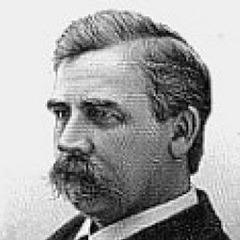
Charles Caleb Colton

Charles Caleb Colton was an English writer active from 1780 to 1832. Known for his humor and wit, he is particularly recognized for his aphorisms and satirical works. more

You May Also Like

“As we ascend in society, like those who climb a mountain, we shall find that the line of perpetual congelation commences with the higher circles; and the nearer we approach to the grand luminary the court, the more frigidity and apathy shall we experience.”

“It is in the middle classes of society that all the finest feeling, and the most amiable propensities of our nature do principally nourish and abound. For the good opinion of our fellow-men is the strongest though not the purest motive to virtue. The privations of poverty render us too cold and callous, and the privileges of property too arrogant and confidential, to feel; the first places us beneath the influence of opinion--the second, above it.”

“Those who have resources within themselves, who can dare to live alone, want friends the least, but, at the same time, best know how to prize them the most. But no company is far preferable to bad, because we are more apt to catch the vices of others than their virtues, as disease is far more contagious than health.”

“We submit to the society of those that can inform us, but we seek the society of those whom we can inform. And men of genius ought not to be chagrined if they see themselves neglected. For when we communicate knowledge, we are raised in our own estimation; but when we receive it, we are lowered.”

“Philosophers have widely differed as to the seat of the soul, and St. Paul has told us that out of the heart proceed murmurings; but there can be no doubt that the seat of perfect contentment is in the head, for every individual is thoroughly satisfied with his own proportion of brains.”

“It is curious that we pay statesmen for what they say, not for what they do; and judge of them from what they do, not from what they say. Hence they have one code of maxims for profession and another for practice, and make up their consciences as the Neapolitans do their beds, with one set of furniture for show and another for use.”

“Perhaps that is nearly the perfection of good writing which is original, but whose truth alone prevents the reader from suspecting that it is so; and which effects that for knowledge which the lens effects for the sunbeam, when it condenses its brightness in order to increase its force.”