“The disappearance of a sense of responsibility is the most far-reaching consequence of submission to authority.”
Quote by Stanley Milgram
Work
Obedience to Authority
This book delves into the psychological mechanisms behind obedience to authority, examining how individuals respond to directives from perceived leaders and the consequences of such compliance. The study investigates the factors that contribute to obedience and the potential for abuse of power, offering insights into human behavior in various social contexts. more
Author
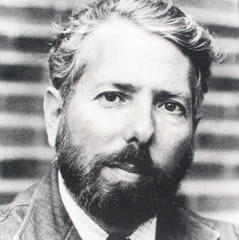
Stanley Milgram
Stanley Milgram (August 15, 1933 - December 20, 1984) was an American social psychologist renowned for his obedience experiments conducted at Yale University in the early 1960s. Born in New York City to Jewish immigrant parents, he earned his Ph.D. in social psychology from Harvard University in 1960. His obedience experiments demonstrated that ordinary people would inflict severe pain on others when instructed by an authority figure, sparking profound debates about human morality and research ethics. Milgram also conducted the "small world" experiment, which gave rise to the concept of "six degrees of separation." His research profoundly influenced social psychology, ethics, and political science. He died of a heart attack in New York at age 51. more
You May Also Like
Source: Pragmatism
Source: Demon-Haunted World: Science as a Candle in the Dark
Source: The plays: of William Shakespeare, in eight volumes, with the corrections and illustrations of various commentators; to which are added notes by Sam. Johnson
“He wanted her to experience all the glorious cheese of life.”
“Everybody is a book of blood; wherever we're opened, we're red.”