Quotessence
Home / Quotes / Quote by John Michael Greer

Quote by John Michael Greer

“Thus the community is within its rights to set and enforce a minimum level of acceptable behavior, but it strays outside its rights if it goes beyond that and imposes ethical demands on its members beyond that. The minimum is business of law, while the effort to go further is the business of ethics-and thus of individual choice. The laws of a community, the measures of acceptable behavior, take shape by the same processes of dissensus as moral choice, but the goal is different. The lawmaking process does not seek the highest possible moral good; it seeks a workable comprimise between individual freedom and the needs of the community. Laws are thus best when they are few, clear, generally accepted, and strictly enforced”

Quote by John Michael Greer

Work

A World Full of Gods: An Inquiry into Polytheism

Browse quotes and source details for this work. more

Author
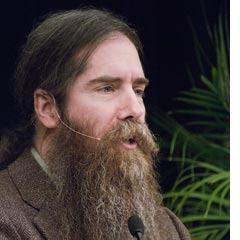
John Michael Greer
John Michael Greer

John Michael Greer, born in 1962, is a well-known blogger. His work primarily focuses on sustainability, ecology, history, and futurism. Greer is known for his profound insights into modern societal issues and his unique perspectives on future possibilities. more

You May Also Like

“Why do people stay together?’ she asks a few minutes later. In long term relationships? I ask. ‘In marriages,’ she says. Because they love each other, I say. They’re committed to each other. There’s comfort there, security. ‘No. They stay together because it’s expected, because it’s what they know. They try to make it work, to endure it, and end up living under some kind of spiritual anesthetic. They go on, but they are numb. And the more I think, the more I think there’s nothing worse than to live your life this way. Detached, but abiding. It’s immoral.”

“Moral people are the most revengeful of mankind, they employ their morality as the best and most subtle weapon of vengeance. They are not satisfied with simply despising and condemning their neighbour themselves, they want the condemnation to be universal and supreme: that is, that all men should rise as one against the condemned, and that even the offender's own conscience shall be against him. Then only are they fully satisfied and reassured. Nothing on earth but morality could lead to such wonderful results.”

“Science has provided the possibility of liberation for human beings from hard labor, but science itself is not a liberator. It creates means not goals. Man should use [Science] for reasonable goals. When the ideals of humanity are war and conquest, those tools become as dangerous as a razor in the hands of a child of three. We must not condemn man’s inventiveness and patient conquest of the forces of nature because they are being used wrongly and disobediently now. The fate of humanity is entirely dependent upon its moral development.”

“Reasoning does create a paradox: it leads both to more rule following and more rebelliousness. By explaining moral principles, parents encourage their children to comply voluntarily with rules that align with important values and to question rules that don’t. Good explanations enable children to develop a code of ethics that often coincides with societal expectations; when they don’t square up, children rely on the internal compass of values rather than the external compass of rules.”

“Sahib, a bamboo doesn’t flower, but usually when it does it dies. So I am metaphorical to this plant. Last night, I flowered. In the morning I died. I am not being guilty or unhappy regarding the occurrence sahib. I am in ecstasy. I never bloomed in my life, I did once and that was my last. What died is the desire to be alive in spite of repetition of events like I used to, the strength to drink my sorrows and search happiness elsewhere not in you. We are bound by the rules of society, and I am a woman of morals. We both know things between us have changed and being around you would simply make no sense practically.”