Quotessence
Home / Quotes / Quote by Rebecca Solnit

Quote by Rebecca Solnit

“Some secret of nurture withered a generation or two before I arrived, if it had ever existed before among the poor, marginalized people on the edges of Europe from whom I descend. Both my parents grew up with a deep sense of poverty that was mostly emotional but that they imagined as material long after they clambered into the middle class, and so they were more like a pair of rivalrous older siblings than parents who see their children as extensions of themselves and their hopes. They were stuck in separateness. I didn't realize anything was odd until I was already on my own and found out that not everyone's parents cut them off financially as soon as the law allowed. I tried to leave home unsuccessfully at fourteen and fifteen and sixteen and did so successfully at seventeen, heading off to another country, as far away as I could go, and once I got there I realized I was more on my own than I had anticipated: I was henceforth entirely repsonsible for myself and thus began a few years of poverty.”

Quote by Rebecca Solnit

Work

The Faraway Nearby

In this evocative work, the author weaves together personal anecdotes, fairy tales, and literary references to create a tapestry of interconnected narratives. The story delves into the complexities of mother-daughter relationships, the passage of time, and the power of storytelling as a means of understanding and coping with life's challenges. more

Author
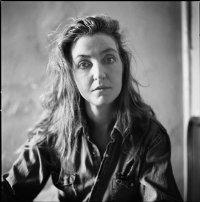
Rebecca Solnit
Rebecca Solnit

Rebecca Solnit is an American writer known for her works on environmental, cultural, political, and social issues. Her writing spans a wide range of topics, including nature, travel, gender, and power. Her books include 'Wanderlust', 'A Field Guide to Getting Lost', and 'The Faraway Nearby'. more

You May Also Like

“Remember, Little Ones, everything is not important all the time. Only living is important all the time. Not things. Not money. Not more things and more endless money. Spend well the quality of your time. And yes, be greedy with your hours. If only to then give those hours away as the most precious gifts you have to offer to yourself, your family, and your friends. And yes, to my Little Ones.” –From The Legacy Letters–“The Everything and Nothing of Money.”

“Wir alle machen unsere ersten Erfahrungen am anderen Geschlecht an unseren Eltern und Geschwistern. Die Beziehung der Eltern zueinander, die an ihnen erlebte Ehe oder sonstige Gemeinschaft, die Erfahrungen mit unseren Geschwistern formen unsere Erwartungen von Partnerschaft, Liebe und Sexualität. Hatten wir das Glück, unsere Eltern auch als Paar lieben zu können, ohne sie idealisieren zu müssen, ohne sie andererseits bedauern oder verachten, ja vielleicht hassen zu müssen; konnten wir ihre Begrenztheit, ihre Sorgen und Probleme, ihr Bemühen miterleben, aber auch ihre Freuden, ihr Zueinander-Stehen, ihr Verständnis für und ihr Vertrauen zueinander, haben wir mehr Aussichten, einen Partner zu finden, der solchen Erwartungen entspricht, und haben zugleich für unser eigenes Partner-Sein ein realisierbares Bild vorschweben.”

“Elinor had read countless stories in which the main characters fell sick at some point because they were so unhappy. She had always thought that a very romantic idea, but she’d dismissed it as a pure invention of the world of books. All those wilting heroes and heroines who suddenly gave up the ghost just because of unrequited love or longing for something they’d lost! Elinor had always enjoyed their sufferings—as a reader will. After all, that was what you wanted from books: great emotions you’d never felt yourself, pain you could leave behind by closing the book if it got too bad. Death and destruction felt deliciously real conjured up with the right words, and you could leave them behind between the pages as you pleased, at no cost or risk to yourself.”

“We drove on in silence, Dad shaking his head in disgust every few minutes. I stared at him, wondering how it was we got to this place. How the same man who held his infant daughter and kissed her tiny face could one day be so determined to shut her out of his life, out of his heart. How, even when she reached out to him in distress - Please, Dad, come get me, come save me - all he could do was accuse her. How that same daughter could look at him and feel nothing but contempt and blame and resentment, because that's all that radiated off of him for so many years and it had become contagious.”

“We grow up opposing our parents only to become like them enough to oppose our children who behave as we once did—a reminder of how dreadful we were toward those now vindicated grandparents. And you thought God had no sense of humor.”