Quotessence
Home / Quotes / Quote by Edwin Campion Vaughan

Quote by Edwin Campion Vaughan

“The cries of the wounded had much diminished now, and as we staggered down the road, the reason was only too apparent, for the water was right over the tops of the shell-holes.”

Quote by Edwin Campion Vaughan

Author
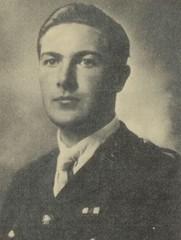
Edwin Campion Vaughan

Edwin Campion Vaughan was a person born on November 30, 1897, and died on June 8, 1931. His detailed information is limited at present. more

You May Also Like

“I wish those people who write so glibly about this being a holy war and the orators who talk so much about going on, no matter how long the war lasts and what it may mean, could see a case of musterd gas - the poor things burnt and blistered all over with great musterd coloured suppurating blisters, with blind eyes, all sticky and stuck together, and always fighting for breath, with voices a mere whisper, saying their throats are closing and they know they will choke.”

“Some men of the line regiment who had appeared on our right started running back. I shouted out to them to halt, but they took no notice. I pulled out my revolver and very nearly shot at them, but I thought it wouldn't do any good, as they all had their backs to me so would have thought that anyone hit was hit by a German bullet. If I ran after them my men might think I was running away. So I took my men on!”

“At 8 o'clock in the morning a dense throng of workers - almost 10,000 - assembled in the square, which the police had already occupied well ahead of time. Karl Liebknecht's voice then rang out: 'Down with the War! Down with the Government!' The police immediately rushed at him. For the first time since the beginning of the war open resistance to it had appeared on the streets of the capital. The ice was broken.”

“The storm lashes us, out of the confusion of grey and yellow the hail of splinters whips forth the childlike cries of the wounded, and in the night shattered life groans painfully into silence. Our hands are earth, our bodies clay and our eyes pools of rain. We do not know whether we are still alive.”

“As a result of continuous work with these highly toxic substances, our minds were so numbed that we no longer had any scruples about the whole thing. Anyway, our enemies had by now adopted our methods and as they became increasingly successful in this mode of warfare we were no longer exclusively the aggressors, but found ourselves more and more at the receiving end.”

“Until the dead are buried they change somewhat in appearance each day. The color change in Caucasian races is from white to yellow, to yellow-green, to black. If left long enough in the heat the flesh comes to resemble coal-tar, especially where it has been broken or torn, and it has quite a visible tarlike iridescence. The dead grow larger each day until sometimes they become quite too big for their uniforms, filling these until they seem blown tight enough to burst. The individual members may increase in girth to an unbelievable extent and faces fill as taut and globular as balloons.”