Quotessence
Home / Quotes / Quote by Patti Smith

Quote by Patti Smith

“On that night, too excited to sleep, infinite possibilities seemed to swirl above me. I stared up at the plaster ceiling as I had done as a child. It seemed to me that the vibrating patterns overhead were sliding into place. The mandala of my life.”

Quote by Patti Smith

Work

Just Kids

Pulitzer Prize-winning author Patti Smith recounts her early life and friendship with artist Robert Mapplethorpe, offering a vivid portrayal of the bohemian art scene in New York during that era. more

Author

Patti Smith
Patti Smith

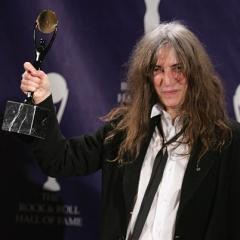
Patti Smith is an influential American singer-songwriter, born on December 30, 1946. Known for her unique musical style and poetic lyrics, she is considered one of the pioneers of post-punk and punk rock. Smith's music career began in the 1970s, and she quickly became a star in the underground music scene. Her debut album 'Horses' was released in 1975 and is considered a landmark in punk rock. more

You May Also Like

“The power of falsehood must be taken as far as a will to deceive, an artistic will which alone is capable of competing with the ascetic ideal and successfully opposing it. It is art which invents the lies that raise falsehood to this highest affirmative power, that turns the will to deceive into something which is affirmed in the power of falsehood. For the artist, appearance no longer means the negation of the real in this world but this kind of selection, correction, redoubling and affirmation. Then truth perhaps takes on a new sense.”

“The philosopher Martin Heidegger argued that "Great Art" is "truth-disclosing," and therefore, following the thinking of Georg Wilhelm Friedrich Hegel, Heidegger asserted that Great Art only existed in the past. Indeed, even Heidegger would have wavered on whether Great Art - or Hegel's "art and the absolute" - survived into the seventeenth century, the time of St Peter's and the baroque. Just the same, Heidegger reasoned that in the modern era Great Art is dead; art may still exist but it is not great. It cannot be great because it is propelled by aesthetics rather than truth. Without truth there is no philosophy of art. To be true, art must, in Hegel's and Heidegger's terms, be accepted by a culture as a whole. I believe we can say with some certainty that the Catholic world as a whole accepted this building and saw it much as worshippers and pilgrims experienced Chartres Cathedral, for instance, in the thirteenth century: it is the Heavenly Jerusalem come to earth.”

“نفسم را در سینه حبس کردم و گفتم: (( هر زنی ذاتاً منحصر به فرده. چه لزومی داره لباساش منحصر به فرد باشن، وقتی همین که لباس رو بپوشه اون رو منحصر به فرد می کنه؟ لباسای من طوری طراحی شدن که خود شما اول دیده بشین بارونس نه لباساتون.)) پ ن: این بشر واقعاً نبوغ بی نظیری پشت طراحی کارهاش داشته که اون رو از همه ی رقبای عصر خودش متمایز می کرده .”

“با دندان های از خشم به هم فشرده گفتم: (( تو خیال می کنی کار من سرگرمیه؟ )) هیچ چیز به اندازه ی تصور بی ارادگی و بی عرضگی، عصبانیت مرا بر نمی انگیخت. پ ن : منم همینطور کوکو، منم”