“Tu comprends... ce billet, - c'était très émouvant: Je me suis fait pleurer moi-même en l'écrivant.”
Book:CYRANO DE BERGERAC
“Tu comprends... ce billet, - c'était très émouvant: Je me suis fait pleurer moi-même en l'écrivant.”
This verse drama, first performed in 1897, centers on Cyrano de Bergerac, a Gascon nobleman celebrated for his wit, courage, and mastery of language, yet burdened by self-consciousness about his prominent nose. He falls in love with his cousin Roxane, but believing his appearance disqualifies him from romance, he instead becomes the ghostwriter for the handsome but inarticulate Christian de Neuvillette. Cyrano supplies eloquent letters and speeches that win Roxane's heart, creating a love triangle sustained by deception and sacrifice. The play unfolds against the backdrop of seventeenth-century France, including military campaigns against Spain, and explores themes of inner versus outer beauty, the conflict between appearance and reality, and the nobility of unrequited devotion. The work revived the tradition of Romantic drama in France and has remained widely performed and adapted across multiple media. more
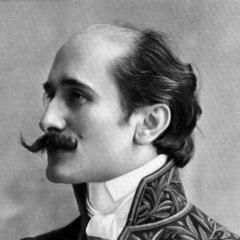
Edmond Rostand, a French poet, was born on April 1, 1868, and died on December 2, 1918. His poetry was widely appreciated, particularly his dramatic works, most notably his adaptation of Shakespeare's 'Romeo and Juliet' into 'Cyrano de Bergerac'. Rostand is known for his elegant verses and profound emotional expression. more
“Elle pleurait des mots qui se mélangeaient les uns aux autres.”
“Dio mio! Un minuto intero di beatitudine! È forse poco per colmare tutta la vita di un uomo?...”