Quotessence
Home / Quotes / Quote by H. G. Wells

Quote by H. G. Wells

“Even men who were engaged in organizing debt-serf cultivation and debt-serf industrialism in the American cotton districts, in the old rubber plantations, and in the factories of India, China, and South Italy, appeared as generous supporters of and subscribers to the sacred cause of individual liberty.”

Quote by H. G. Wells

Work

Shape Things Come

This book delves into the concept of shaping one's own destiny through the power of the mind and the influence of imagination on the physical world. more

Author

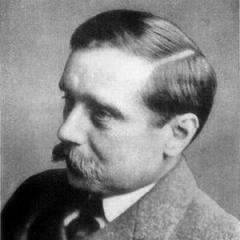
H. G. Wells
H. G. Wells

H.G. Wells was a prominent English writer known for his science fiction, history, and social commentary. His most famous works include 'The Time Machine,' 'The War of the Worlds,' and 'The Invisible Man.' Born on September 21, 1866, in Bromley, Kent, England, Wells passed away on August 13, 1946. more

You May Also Like

“The displacement of the idea that facts and evidence matter by the idea that everything boils down to subjective interests and perspectives is - second only to American political campaigns - the most prominent and pernicious manifestation of anti-intellectualism in our time.”

“To know what Fascism really is we must first of all know what it is we are fighting, what the Fascist regimes really are and do, who puts up the money and backs Fascism in every country, and who owns the nations under such regimes, and why the natives of all Fascist countries must be driven into harder work, less money, reduced standards of living, poverty and desperation so that the men and corporations who found, subsidize and own Fascism can grow unbelievably rich.”

“When misguided public opinion honors what is despicable and despises what is honorable, punishes virtue and rewards vice, encourages what is harmful and discourages what is useful, applauds falsehood and smothers truth under indifference or insult, a nation turns its back on progress and can be restored only by the terrible lessons of catastrophe.”

“The powers of financial capitalism had a far-reaching aim, nothing less than to create a world system of financial control in private hands able to dominate the political system of each country and the economy of the world as a whole. This system was to be controlled in a feudalist fashion by the central banks of the world acting in concert, by secret agreements arrived at in frequent meetings and conferences.”