Quotessence
Home / Quotes / Quote by Terry Tempest Williams

Quote by Terry Tempest Williams

“I think community is a shared history, it's a shared experience. It's not always agreement. In fact, I think that often it isn't. It's the commitment, again, to stay with something - to go the duration. You can't walk away. It's like a marriage, only I think it's more difficult to divorce yourself from community than it is to a human being because the strands are interconnected and so various.”

Quote by Terry Tempest Williams

Author
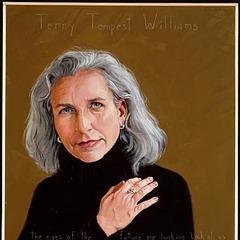
Terry Tempest Williams

Terry Tempest Williams is an American author known for her profound insights into the relationship between humans and nature. Her works often explore themes such as environmental protection, feminism, and identity. more

You May Also Like

“Having lived in Utah all of my life, I can tell that in many ways I know of no place more lonely, no place more unfamiliar. When I talk about how it is both a blessing and a burden to have those kinds of roots, it can be terribly isolating, because when you are so familiar, you know the shadow.”

“When Pico [Iyer] talks about home being a place of isolation, I think he's right. But it's the paradox. I think that's why I so love Great Salt Lake. Every day when I look out at that lake, I think, "Ah, paradox" - a body of water than no one can drink. It's the liquid lie of the desert. But I think we have those paradoxes within us and certainly the whole idea of home is windswept with paradox.”

“Downwinders, meaning those people, individuals, communities that were downwind of the nuclear test site. During those years when we were testing atomic bombs above ground, when we watched them for entertainment from the roofs of our high schools, little did we know what was raining down on us, little did we know what would appear years later.”

“I write about nuclear tests in Refuge - "The Clan of One-Breasted Women." With so many of the women in my family being diagnosed with breast cancer, mastectomies led to one-breasted women. I believe it is the result of nuclear fallout.”

“I think that what I was talking about was that as a woman growing up in a Mormon tradition in Salt Lake City, Utah, we were taught - and we are still led to believe - that the most important value is obedience. But that obedience in the name of religion or patriotism ultimately takes our souls. So I think it's this larger issue of what is acceptable and what is not; where do we maintain obedience and law and where do we engage in civil disobedience - where we can cross the line physically and metaphorically and say, "No, this is no longer appropriate behavior."”