“In regard to the past, where contemplation is not obscured by desire and the need for action, we see, more clearly than in the lives about us, the value for good and evil, of the aims men have pursued and the means they have adopted. It is good, from time to time, to view the present as already past, and to examine what elements it contains that will add to the world's store of permanent possessions, that will live and give life when we and all our generation have perished.”
Quote by Bertrand Russell
Work
Contemplation and Action, 1902-14
This book delves into the philosophical and societal implications of balancing introspection and engagement, offering insights into the period's intellectual discourse. more
Author
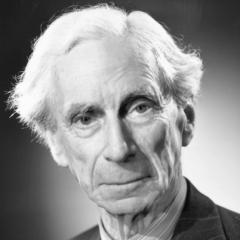
Bertrand Russell
Bertrand Russell was a British philosopher, mathematician, and logician born on May 18, 1872, and died on February 2, 1970. He is known for his contributions to logic and mathematics, particularly in the fields of mathematical logic and philosophical analysis. His works spanned a wide range of subjects, including ethics, political philosophy, history, and literary criticism. more
You May Also Like
Source: Ancient Wisdom, Modern World: Ethics for the New Millennium
“If today I stand here as a revolutionary, it is as a revolutionary against the Revolution.”
Source: My new order
“I joined the party because I was a revolutionary, not because of any ideological nonsense.”
Source: THE
Source: Adolf Hitler from Speeches 1933-1938