Quotessence
Home / Quotes / Quote by Seyyed Hossein Nasr

Quote by Seyyed Hossein Nasr

“The Quran mentions the story of Moses and Khidr [a prophet mentioned in the Quran who guided Moses on a revelatory journey], a famous story, in which Moses represents sort of the external understanding of the religion and Khidr represents the inner spiritual understanding of the religion. Moses went on a journey with Khidr and Khidr said, "I will not accept you unless you stop questioning things," which from an external point of view seems strange, but inwardly is very meaningful. This is exactly the question of spiritual guidance.”

Quote by Seyyed Hossein Nasr

Author
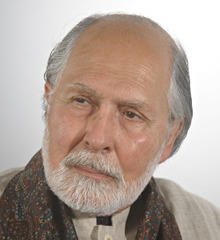
Seyyed Hossein Nasr
Seyyed Hossein Nasr

Seyyed Hossein Nasr is a distinguished Iranian philosopher, intellectual, and scholar of Islamic studies. Born on April 7, 1933, he has made significant contributions to the field of Islamic philosophy and comparative religion. His work emphasizes the importance of understanding Islamic thought in its historical and cultural context. more

You May Also Like

“There is no religion in the world where there is a possibility of spiritual development outside of the context of that religion. This is only a modern invention. For example, Christian mystics were also Christians. They also went to Church and followed Christian laws. Hindu mystics were practicing Hindus; they didn't kill cows and have steak. They follow the Hindu laws and so on and so forth down the line and Sufism is no exception.”

“There is an idea that you can take the spiritual teachings of a religion outside of a religion and practice them; these ideas are brought forward. That appears to be easy. You can say, "Oh, well. I don't have to bother about not eating pork, and not drinking wine, and all you have to do is read the beautiful poetry of Rumi and talk about wine, women and song. Or something like that." This kind of attitude. This is the antipode of the other attitude which says Islam is nothing but throwing bombs, it has nothing to do with internal or inward purification.”

“Al-Hallaj has a special destiny. He came at a time when worldliness, the luxury, were inundating the Islamic world. His function was to act as kind of an antithesis to this, and he paid for it with his life, and he was very happy to do so. He smiled as he went to the executioner. That was done because it shook the conscience of the Islamic peoples of that time. But the vast majority, the vast, vast, vast majority of Sufis, they have not met the destiny of al-Hallaj. They have spoken about reaching "the Truth" and there is nothing dangerous about it.”

“Look at Senegal, about 90% of the Muslims in Senegal are Tijani or Qadiri Sufis. Among them, they have very great teachers who have written poems about al-Hallaj, and they have not been killed. In fact, it's Sufism that brought Islam through all of Senegal, right under our noses the last couple of centuries. And you can go down the same line through Indonesia and Malaysia.”

“How did the Turks become Muslim? They became Muslim through the Sufis. The Arabs never conquered the Turks. There were people in early Islam who were speaking like Hallaj, who spoke about the Truth, about reaching the Truth, about being one with the Truth, and not only they were not killed, but they were great heroes of their own culture, and there is a university in Turkey named after one [Sufi Saint.]”