Quotessence
Home / Quotes / Quote by Jules Renard

Quote by Jules Renard

“The peasant is the only species of human being who doesn't like the country and never looks at it.”

Quote by Jules Renard

Author
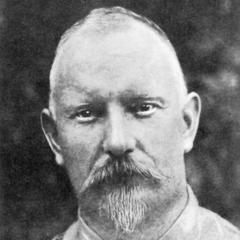
Jules Renard
Jules Renard

Jules Renard was a French author born on January 22, 1864, and died on May 22, 1910. Known for his humor, satire, and profound observations, he is considered one of the important symbolist writers in the history of French literature. more

You May Also Like

“I wouldn't worry about it too much, son. Certainly not about the peasants and the servants. They don't feel things as we do.” “They're human.” “Barely. They might as well be another species. What would happen without us to keep them in check? They wouldn't work the land. They would be at each other's throat if we weren't there to restrain them. Face it, they are driven by their instincts. Granted, that is a generalization, and there are some individuals who rise above that. Personally I think that is how the nobility originated. Even today, with the help of the Gods, hard work and some luck such a man can rise above his station. But as a group…”

“Only a few miles from any city centre one would find oneself already in the backwoods, where there were bandits living in the forests, where roads turned into muddy bogs in spring, and where the external signs of life in the remote hamlets had remained essentially unchanged since the Middle Ages. Yet, despite living so close to the peasants, the educated classes of the cities knew next to nothing about their world. It was as exotic and alien to them as the natives of Africa were to their distant colonial rulers.”

“The peasants are not concerned about ideology: no one can frighten them with stories of the evils of communism. With their property already destroyed, they do not fear that the Communists will take their property. And if one speaks to them of freedom and democracy, they say, "Of what use is freedom and democracy if one is not alive to enjoy them?" So it is clear that the first problem of the Vietnamese peasant is a problem of life itself: how to survive in the midst of all the forces that threaten them; how to cling to life itself.”

“What I’m talking about is the order of chosen men who inherit power. From Pharaohs and kings to bankers and executives. Their path is paved for them, and life is but a child’s lavish play pen. It used to be that the peasants would toil in meaningless servitude, unable to see the big picture, without a chance to break the cycle. Now we have computers to help us do our research. Suddenly, the rhythms and patterns of oppression and deceit since time immemorial come into startling focus.”

“Stability, the deep, cushiony ability to take blows, and yet to keep things as they were, came from the special place of these people on the land. The peasants were agriculturalists; their livelihood sprang from the earth. Americans they met later would have called them "farmers", but that word had a different meaning in Europe. The bonds that held these men to their acres were not simply the personal ones of the husbandman who temporarily mixes his sweat with the soil. The ties were deeper, more intimate. For the peasant was part of a community and the community was held to the land as a whole.”