Quotessence
Home / Quotes / Quote by Daryl Gregory

Quote by Daryl Gregory

Work

Afterparty

In 'Afterparty,' readers are taken on a journey through the lives of a group of individuals whose paths intersect during a pivotal night. The narrative unfolds as the characters grapple with the consequences of their actions and the underlying issues of addiction and its effects on their lives and relationships. The story is a compelling examination of the human condition, offering a nuanced look at the challenges faced by those in the throes of addiction and the hope that can be found in the process of recovery. more
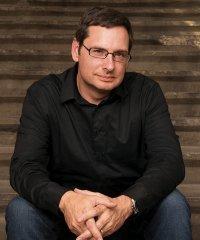
Author

Daryl Gregory
Daryl Gregory

Daryl Gregory is an American author born in 1965. His works are known for their science fiction and fantasy elements, which have won him a dedicated following. more

You May Also Like

“What I’m talking about is the order of chosen men who inherit power. From Pharaohs and kings to bankers and executives. Their path is paved for them, and life is but a child’s lavish play pen. It used to be that the peasants would toil in meaningless servitude, unable to see the big picture, without a chance to break the cycle. Now we have computers to help us do our research. Suddenly, the rhythms and patterns of oppression and deceit since time immemorial come into startling focus.”

“Stability, the deep, cushiony ability to take blows, and yet to keep things as they were, came from the special place of these people on the land. The peasants were agriculturalists; their livelihood sprang from the earth. Americans they met later would have called them "farmers", but that word had a different meaning in Europe. The bonds that held these men to their acres were not simply the personal ones of the husbandman who temporarily mixes his sweat with the soil. The ties were deeper, more intimate. For the peasant was part of a community and the community was held to the land as a whole.”

“The spirit of patriotism among the peasants is very high. They are not informed about world history or ideological struggles; what they see is a large force of white Westerners doing their best to kill their fellow countrymen, many of whom previously fought against the French. The peasants do not see the victims of the American military as dead Communists, but as dead patriots.”

“Almost overnight, Soviet peasants needed to become factory workers and miners. Industrialization was to be financed by domestic means, given the absence of any meaningful foreign investments in the country; this meant that the peasantry that did not join the industrial workforce had to foot much of the bill. Herding them into collective farms seemed a promising way to force them to pay this bill. Stalin would state, not long after he unleashed the full brunt of his modernization program, that the Soviet Union was at least half a century behind the industrialized world, and needed to catch up with it within a decade. Every sacrifice toward this goal was justified. This, then, was the broader context in which Soviet daily life played itself out between 1928 and 1933.”

“– All strong independent farmers are driven into unbearable conditions. Sooner or later, following the Party’s orders, they will come and eliminate us as a class — within an hour.”

“– Independent farmers are arrested and deported somewhere to the Urals or Siberia. I fear we may be the next to be labeled ‘kulaks’. — Volodymyr Shablia, Stone. Book Two Context note: During the forced collectivization in the USSR, millions of peasants were forcibly deported to remote regions such as Siberia and the Urals as part of state repression against on wealthy peasants (nicknamed "kulaks" by the Soviet authorities).”

“That’s how we’ve ended up,” Ivan said with a bitter smile. “We work, as in the proverb: Enough trading, father — there’s no change left to give. ‘Why did they suddenly increase the grain procurement plan?’ Vasyl protested. ‘Everything seems the same — but it isn’t,’ Danylo explained. ‘The status of our land has changed, and so has the status of the collective farmers. What grew last year is now taxed differently. Even the poor peasants who joined the collective are no longer considered poor — and the taxes rise accordingly.’ ‘Clever,’ Ivan muttered angrily. ‘They’ve laid out their accounting traps well.’ — Volodymyr Shablia, Stone. Book Two Context note: In Soviet collective farms, taxes and grain quotas were often increased not because of real agricultural growth, but due to bureaucratic reclassification. Accounting became a tool of pressure that made normal farming impossible.”