“It is significant that whenever the public mind is to be diverted from great social wrong, a crusade is inaugurated against indecency.”
Quote by Emma Goldman
Work
Anarchy and the Sex Question: Essays on Women and Emancipation, 1896–1926
The book delves into the historical context of the period, examining the contributions of various thinkers and activists to the discourse on women's rights and the broader anarchist movement. It includes analyses of the social, political, and economic factors influencing the struggle for gender equality and liberation. more
Author
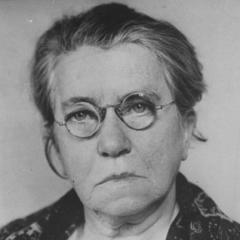
Emma Goldman
Emma Goldman was a prominent American writer, lecturer, and activist, known for her work in anarchism and feminism. Born on June 27, 1869, in Lithuania, she immigrated to the United States in her teens. Goldman's life was marked by her advocacy for workers' rights, free speech, and sexual liberation. She was a key figure in the American labor movement and the early 20th-century radical movement. Her influential writings and speaking engagements made her a leading voice in the fight for social and political change. She passed away on May 14, 1940. more
You May Also Like
Source: Emma Goldman: Made for America, 1890-1901
Source: Stirner: The Ego and Its Own
Source: Stirner: The Ego and Its Own
“Thus the radii of all education run together into one center which is called personality.”
Source: The False Principle of Our Education: Or, Humanism and Realism
Source: The False Principle of Our Education: Or, Humanism and Realism