“The web of hypocrisy of today hangs on the frontiers of two domains, between which our time swings back and forth, attaching its fine threads of deception and self-deception. No longer vigorous enough to serve morality without doubt or weakening, not yet reckless enough to live wholly to egoism, it trembles now toward the one and now toward the other in the spider-web of hypocrisy, and, crippled by the curse of halfness, catches only miserable, stupid flies.”
Quote by Max Stirner
Work
Stirner: The Ego and Its Own
This book is a seminal work in the field of individualist anarchism, advocating for the primacy of the individual over societal norms and institutions. It delves into the concept of the ego as the central driving force of human action and thought. more
Author
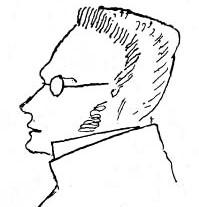
Max Stirner
Max Stirner was a German philosopher born on October 25, 1806, and died on June 26, 1856. His philosophical thoughts revolve around individualism and egoism, which had a profound impact on later existentialism and nihilism. more
You May Also Like
Source: Stirner: The Ego and Its Own
“Thus the radii of all education run together into one center which is called personality.”
Source: The False Principle of Our Education: Or, Humanism and Realism
Source: The False Principle of Our Education: Or, Humanism and Realism
Source: Stirner: The Ego and Its Own
“The free development of each is the condition for the free development of all.”
Source: The Communist Manifesto in Plain and Simple English