“The first office of the social organ we call the school is to provide a simplified environment. It selects the features which are fairly fundamental and capable of being responded to by the young. Then it establishes a progressive order, using the factors first acquired as means of gaining insight into what is more complicated.”
Quote by John Dewey
Work
Democracy And Education
This seminal work delves into the intersection of democracy and education, examining how democratic principles can influence and be influenced by educational institutions and curricula. The author critically analyzes the historical and contemporary aspects of democratic education, offering insights into the development of democratic societies through education. more
Author
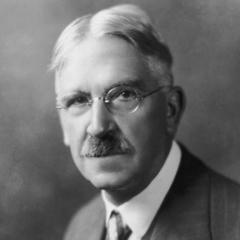
John Dewey
John Dewey was an American philosopher and educator, born on October 20, 1859, and died on June 1, 1952. He was a leading figure in the philosophy of pragmatism and had a profound impact on 20th-century education, philosophy, and the social sciences. more
You May Also Like
“Selection aims not only at simplifying but at weeding out what is undesirable.”
Source: Democracy And Education
Source: Democracy And Education
Source: Democracy And Education
Source: Democracy And Education
Source: Democracy And Education
Source: Democracy and Education: An Introduction to the Philosophy of Education
“It is better to look ahead and prepare than to look back and regret.”
Source: Democracy and Education - An Introduction to the Philosophy of Education
Source: Democracy And Education