Quotessence
Home / Quotes / Quote by Teju Cole

Quote by Teju Cole

“Almost everyone, as almost always at such concerts, was white. It is something I can't help noticing; I notice it each time, and try to see past it. Part of that is a quick, complex series of negotiations: chiding myself for even seeing it, lamenting the reminders of how divided our life still remains, being annoyed that these thoughts can be counted on to pass through my mind at some point in the evening. Most of the people around me yesterday were middle-aged or old. I am used to it, but it never ceases to surprise me how easy it is to leave the hybridity of the city, and enter into all-white spaces, the homogeneity of which, as far as I can tell, causes no discomfort to the whites in them. The only thing odd, to some of them, is seeing me, young and black, in my seat or at the concession stand. At times, standing in line for the bathroom during intermission, I get looks that make me feel like Ota Benga, the Mbuti man who was put on display in the Monkey House at the Bronx Zoo in 1906. I weary of such thoughts, but I am habituated to them. But Mahler's music is not white, or black, not old or young, and whether it is even specifically human, rather than in accord with more universal vibrations, is open to question.”

Quote by Teju Cole

Work

Open City

In this introspective novel, the protagonist, a young man of immigrant descent, navigates the diverse and intricate landscape of New York City. The story delves into themes of identity, immigration, and the challenges of fitting into a new society while maintaining cultural heritage. The narrative is characterized by its meditative tone and the exploration of the protagonist's personal and philosophical musings. more

Author
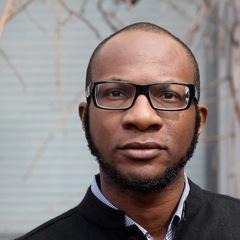
Teju Cole
Teju Cole

Teju Cole, born on June 27, 1975, is a distinguished Nigerian-American writer known for his unique literary style and profound insights into contemporary social issues. His works, which include novels, photography, and essays, explore themes of race, identity, and globalization. Cole's debut novel, 'Every Day Is a Good Day,' won the 2008 National Book Award, and his photography and essays have also received widespread recognition, including the Photography Prize from The New Yorker magazine. more

You May Also Like

“While bilingual is understood as a valuable asset or goal for middle-class and upper-class students, for working-class and poor students it is framed as a disability that must be overcome”

“Conversations about class are resisted in part because there is a tendency to imagine that one's class reflects upon one's character. What is key to America's understanding of class is the persistent belief - despite all evidence to the contrary - that anyone, with the proper discipline and drive, can move from a lower class to a higher class. We recognize that mobility may be difficult, but the key to our collective self-image is the assumption that mobility is always possible, so failure to move up reflects on one's character.”

“The fact that acute differences exist between social and cultural classes seems to be acknowledged in most of the world, but in the United States, where democracy is often confounded with egalitarianism, even the idea that social classes exist has long been taboo. It is, however, a writer’s specialty to deal with taboos, to speak the unspoken, to reveal, to uncover, to show in the interaction of people the difference between what we profess and how we act. Moreover, because touchy subjects arouse emotion, they are especially useful for the writer who knows that arousing the emotions of his audience is the test of his skill.”

“But the underlying capability of the computer era is actually programming—which almost none of us knows how to do. We simply use the programs that have been made for us, and enter our text in the appropriate box on the screen. We teach kids how to use software to write, but not how to write software. This means they have access to the capabilities given to them by others, but not the power to determine the value-creating capabilities of these technologies for themselves.”

“Exactly! Ever heard of King Arthur’s circular table? A circular table was selected to symbolize that all the people sitting on it were equal and their opinions mattered equally. We are sitting on a circular table, but is there equal freedom of speech and expression right now? There is no ‘head’ to this table, and yet we INSURGENTS---- why do we have to be called INSURGENTS for our voices----yeah, we INSURGENTS are put under you ALLIES just for mentioning our concerns! Isn’t that unconstitutional?”

“He could put up with his meaningless office-life, because he never for an instant thought of it as permanent. God knew how or when, he was going to break free of it. After all, there was always his “writing.” Some day, perhaps, he might be able to make a living of sorts by “writing;” and you’d feel you were free of the money-stink if you were a “writer,” would you not? The types he saw all around him, especially the older men, made him squirm. That is what it meant to worship the money-god! To settle down, to Make Good, to sell your soul for a villa and an aspidistra! To turn into the typical bowler-hatted sneak – Strube’s “little man” – the little docile cit who slips home by the six-fifteen to a supper of cottage pie and stewed tinned pears, half an hour’s listening-in to the BBC Symphony Concert, and then perhaps a spot of licit sexual intercourse if his wife “feels in the mood!” What a fate! No, it isn’t like that that one was meant to live. One’s got to get right out of it, out of the money stink.”