Quotessence
Home / Quotes / Quote by Herbert M. Shelton

Quote by Herbert M. Shelton

“Old age is not a time of life. It is a condition of the body. It is not time that ages the body, it is abuse that does.”

Quote by Herbert M. Shelton

Author
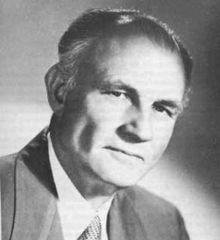
Herbert M. Shelton
Herbert M. Shelton

Herbert M. Shelton was a renowned author born on October 6, 1895, and passed away on January 1, 1985. His works primarily revolved around health and natural therapies, which had a profound impact on modern diet and lifestyle. more

You May Also Like

“An essential portion of any artist’s labor is not creation so much as invocation. Part of the work cannot be made, it must be received; and we cannot have this gift except, perhaps, by supplication, by courting, by creating within ourselves that ‘begging bowl’ to which the gift is drawn.”

“All that we make and do is shaped by the communities and traditions that contain us, not to mention by money, power, politics, and luck. And even should the artist or scientist think she has extracted herself from the world to stand alone in the studio, a tremendous array of faculties and mind-states may well attend her creativity.”

“For the slow labor of realizing a potential gift the artist must retreat to those Bohemias, halfway between the slums and the library, where life is not counted by the clock and where the talented may be sure they will be ignored until that time, if it ever comes, when their gifts are viable enough to be set free and survive in the world.”

“Unlike the sale of a commodity, the giving of a gift tends to establish a relationship between the parties involved. When gifts circulate within a group, their commerce leaves a series of interconnected relationships in its wake, and a kind of decentralized cohesiveness emerges.”

“What is it about a work of art, even when it is bought and sold in the market, that makes us distinguish it from . . . pure commodities? A work of art is a gift, not a commodity. . . works of art exist simultaneously in two “economies”, a market economy and a gift economy. Only one of these is essential, however: a work of art can survive without the market, but where there is no gift, there is no art.”

“The gift moves towards the empty place. As it turns in its circle it turns towards him who has been empty-handed the longest, and if someone appears elsewhere whose need is greater it leaves its old channel and moves toward him. Our generosity may leave us empty, but our emptiness then pulls gently at the whole until the thing in motion returns to replenish us. Social nature abhors a vacuum.”