Quotessence
Home / Quotes / Quote by Alfred-Maurice de Zayas

Quote by Alfred-Maurice de Zayas

“A ten per cent reduction in military expenditures per year would be reasonable, coupled with a programme of retraining the workforce and redirecting the resources in a manner that creates employment and advances social welfare. I also encourage all States to contribute to the UN's annual Report on Military Expenditures by submitting complete data on national defence budgets.”

Quote by Alfred-Maurice de Zayas

Author
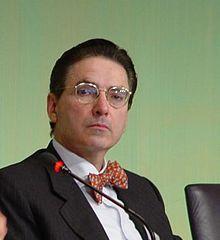
Alfred-Maurice de Zayas

Alfred-Maurice de Zayas is a lawyer born on May 31, 1947. He has extensive research and practical experience in the fields of international law and human rights. more

You May Also Like

“The drafting of a legally binding instrument concerning the human rights impacts of the activities of Transnational Corporations (TNCs) and other business enterprises has been proposed. Such a treaty or convention should strengthen the United Nations “protect, respect and remedy” framework of the Guiding Principles, which were unanimously endorsed by the Human Rights Council in 2011.”

“This new declaration which emphasizes the necessity of global disarmament is based on the purposes and principles of the United Nations, in particular the prohibition of the threat and use of force, and on the obligation to negotiate disputes in conformity with the UN Charter. It is a strong and positive example for the entire world.”

“Bearing in mind that "the market" is not an invention of capitalism but that it has existed for thousands of years in many different societies, social justice logically requires that the profits resulting from the operation of markets and infrastructures created by society be equitably shared within societies and in a larger context within the human family.”

“The war industries in many countries and the enormous trade in weapons of all kinds generate corruption and fuel conflict throughout the world. The existence of an immensely powerful military-industrial complex constitutes a danger to democracy, both internationally and domestically, because it follows its own logic and operates independently of popular participation.”

“Representative democracy frequently manifests a disconnect between parliamentarians and the people, so that parliamentarians have agendas that do not correspond with the wishes of the electorate. This has led in many countries to apathy, cynicism and large-scale absenteeism in elections. What is needed is not only parliaments, but parliamentarians who genuinely represent the wishes of the electorate.”