“I hope I am not for the killing, Anselmo was thinking. I think that after the war there will have to be some great penance done for the killing. If we no longer have religion after the war then I think there must be some form of civic penance organized that all may be cleansed from the killing or else we will never have a true and human basis for living. The killing is necessary, I know, but still the doing of it is very bad for a man and I think that, after all this is over and we have won the war, there must be a penance of some kind for the cleansing of us all.”
Quote by Ernest Hemingway
Work
For Whom the Bell Tolls
This classic novel delves into the intense experiences of a group of individuals during the tumultuous Spanish Civil War. The narrative follows Robert Jordan, an American dynamiter, as he navigates the complexities of love and the harsh realities of war. The story is rich with philosophical musings on the nature of life and death, making it a profound exploration of human existence. more
Author
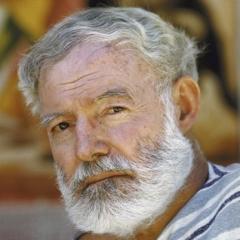
Ernest Hemingway
American author known for his concise and forceful writing style, as well as his profound insights into life. Hemingway's works cover a wide range of themes including war, adventure, and love, with notable titles such as 'The Old Man and the Sea' and 'A Farewell to Arms'. more
You May Also Like
“In no other type of warfare does the advantage lie so heavily with the aggressor.”
“Sometimes, a war saves people.”
Source: A Matter of Principle: Humanitarian Arguments for War in Iraq
Source: Galapagos
Source: الثورة المصرية الكبرى
Source: The Wasted Vigil
Source: The Dream of Scipio
Source: 22 Britannia Road
Source: The Wasted Vigil
Source: The Wasted Vigil