Quotessence
Home / Quotes / Quote by Truman G. Madsen

Quote by Truman G. Madsen

“To be or not to be?' That is not the question. What is the question? The question is not one of being, but of becoming. 'To become more or not to become more' This is the question faced by each intelligence in our universe.”

Quote by Truman G. Madsen

Author
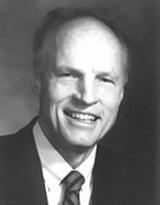
Truman G. Madsen
Truman G. Madsen

Truman G. Madsen was an esteemed professor known for his contributions to the field of religious studies. Born on December 13, 1926, and passing away on May 28, 2009, Madsen was recognized for his deep academic expertise in religious history, theology, and philosophy. His works and lectures had a profound impact on both academia and the public. more

You May Also Like

“The best way to improve the American workforce in the 21st century is to invest in early childhood education, to ensure that even the most disadvantaged children have the opportunity to succeed along side their more advantaged peers”

“Economic theorists, like French chefs in regard to food, have developed stylized models whose ingredients are limited by some unwritten rules. Just as traditional French cooking does not use seaweed or raw fish, so neoclassical models do not make assumptions derived from psychology, anthropology, or sociology. I disagree with any rules that limit the nature of the ingredients in economic models.”

“Some time ago a little-known Scottish philosopher wrote a book on what makes nations succeed and what makes them fail. The Wealth of Nations is still being read today. With the same perspicacity and with the same broad historical perspective, Daron Acemoglu and James Robinson have retackled this same question for our own times. Two centuries from now our great-great- . . . -great grandchildren will be, similarly, reading Why Nations Fail.”

“Molecular biology has shown that even the simplest of all living systems on the earth today, bacterial cells, are exceedingly complex objects. Although the tiniest bacterial cells are incredibly small, weighing less than 10-12 gms, each is in effect a veritable micro-miniaturized factory containing thousands of exquisitely designed pieces of intricate molecular machinery, made up altogether of one hundred thousand million atoms, far more complicated than any machine built by man and absolutely without parallel in the nonliving world.”