Quotessence
Home / Quotes / Quote by Cesare Beccaria

Quote by Cesare Beccaria

Work

On crimes and punishments

This influential treatise presents arguments for humane treatment in the criminal justice system, questioning the legitimacy of torture and capital punishment. The author argues for proportional punishment, the social contract between citizens and government, and the necessity of clear, predictable laws. The work emphasizes that punishments should serve as deterrents and corrections rather than instruments of cruelty, advocating for reforms that would establish justice based on reason rather than arbitrary power. more

Author
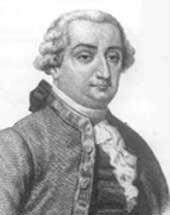
Cesare Beccaria
Cesare Beccaria

Cesare Beccaria was an Italian philosopher, economist, and lawyer, known for his influential work in criminal justice and his advocacy for the separation of powers. He is best remembered for his book 'On Crimes and Punishments', which argued for the application of reason in criminal law and the abolition of torture and capital punishment. more

You May Also Like

“The step between prudence and paranoia is short and steep. Prudence wears a seat belt. Paranoia avoids cars. Prudence washes with soap. Paranoia avoids human contact. Prudence saves for old age. Paranoia hoards even trash. Prudence prepares and plans, paranoia panics. Prudence calculates the risk and takes the plunge. Paranoia never enters the water.”

“In the 'in-itself' there is nothing of 'causal connections', of 'necessity', or of 'psychological non-freedom'; there the effect does not follow the cause, there is no rule or 'law'. It is we alone who have devised cause, sequence, for-each-other, relativity, constraint, number, law, freedom, motive, and purpose; and when we project and mix this symbol world into things as if it existed 'in itself', we act once more as we have always acted- mythologically.”

“Since ancient times, the left side has stood for the side of the unconscious or the unknown; the right side, by contrast, has represented the side of consciousness or wakefulness. Through the late twentieth century, the movement of the Left limited themselves to a materialist understanding of reality- exemplified by Marxism- demanding social justice and economic equality but not the restoration of intuition and the recognition of the hidden, qualitative dimensions of being suppressed by the mental-rational consciousness, narrowly focused on the quantifiable.”

“Indeed, what forces us at all to suppose that there is an essential opposition of 'true' and 'false'? Is it not sufficient to assume degrees of apparentness and, as it were, lighter and darker shadows and shades of appearance- different 'values', to use the language of painters?”