Quotessence
Home / Quotes / Quote by Alexis de Tocqueville

Quote by Alexis de Tocqueville

“The more I view the independence of the press in its principal effects, the more I convince myself that among the moderns the independence of the press is the capital and so to speak the constitutive element of freedom.”

Quote by Alexis de Tocqueville

Author
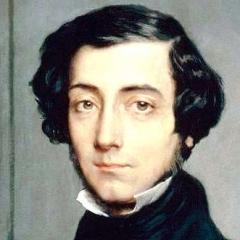
Alexis de Tocqueville

Alexis de Tocqueville was a French historian and political theorist renowned for his seminal work 'Democracy in America'. He embarked on a journey to the United States in the 1830s to examine its democratic institutions, and his observations were compiled into a two-volume book that remains a cornerstone in the study of American democracy and political science. more

You May Also Like

“That this liberty [of the press] is often carried to excess; that it has sometimes degenerated into licentiousness, is seen and lamented, but the remedy has not yet been discovered. Perhaps it is an evil inseparable from the good with which it is allied; perhaps it is a shoot which cannot be stripped from the stalk without wounding vitally the plant from which it is torn. However desirable those measures might be which might correct without enslaving the press, they have never yet been devised in America.”

“The true liberty of the press is amply secured by permitting every man to publish his opinion; but it is due to the peace and dignity of society, to inquire into the motives of such publications, and to distinguish between those which are meant for use and reformation, and with an eye solely to the public good, and those which are intended merely to delude and defame. To the latter description, it is impossible that any good government should afford protection and impunity.”

“Wherever indeed a right of property is infringed for the general good, if the nature of the case admits of compensation, it ought to be made; but if compensation be impracticable, that impracticability ought to be an obstacle to a clearly essential reform.”

“And it is no less true, that personal security and private property rest entirely upon the wisdom, the stability, and the integrity of the courts of justice.”

“In the latter sense, a man has a property in his opinions and the free communication of them. He has a property of peculiar value in his religious opinions, and in the profession and practice dictated by them. He has an equal property in the free use of his faculties and free choice of the objects on which to employ them. In a word, as a man is said to have a right to his property, he may be equally said to have a property in his rights.”

“It is evident that the right of acquiring and possessing property, and having it protected, is one of the natural, inherent, and unalienable rights of man. Men have a sense of property: Property is necessary to their subsistence, and correspondent to their natural wants and desires; its security was one of the objects, that induced them to unite in society. No man would become a member of a community, in which he could not enjoy the fruits of his honest labour and industry.”

“[T]he most common and durable source of factions has been the various and unequal distribution of property. Those who hold and those who are without property have ever formed distinct interests in society. Those who are creditors, and those who are debtors, fall under a like discrimination. A landed interest, a manufacturing interest, a mercantile interest, a moneyed interest, with many lesser interests, grow up of necessity in civilized nations, and divide them into different classes, actuated by different sentiments and views.”