Quotessence
Home / Quotes / Quote by Gretel Ehrlich

Quote by Gretel Ehrlich

“As fog moved to the mainland I heard a flock of birds fly over. They sounded like a dress rustling, a dress being unfastened and dropping to the floor. Fog came unpinned like hair. On the beach cliffs, great colonies of datura - jimson weed - with their white trumpet flowers, looked like brass bands.”

Quote by Gretel Ehrlich

Work

A match to the heart

This novel delves into the emotional journey of its characters as they navigate the intricacies of romantic connections and the heart's desires. more

Author

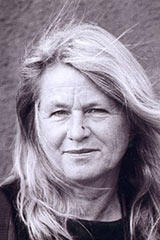
Gretel Ehrlich
Gretel Ehrlich

Gretel Ehrlich is an American writer known for her profound insights into the relationship between humans and the natural world. Her works are typically presented in the form of poetry and prose, exploring the complex relationship between humans and the natural world. more

You May Also Like

“All that's known is this: there is no central processor, no single computer. Nothing that simple. Millions of neurons process information simultaneously and in parallel, not linearly, but the actual chemistry and electrical properties of that integrative process are still being mapped. Even so, it seems odd that during the evolution of brain circuitry and thinking, the ability to understand itself did not get wired in. Such built-in innocence seems like a terrible oversight.”

“June marked the end of spring on California's central coast and the beginning of five months of dormancy that often erupted in fire. Mustard's yellow robes had long since turned red, then brown. Fog and sun mixed to create haze. The land had rusted. The mountains, once blue-hued with young oaks and blooming ceanosis, were tan and gray. I walked across the fallen blossoms of five yucca plants: only the bare poles of their stems remained to mark where their lights had shone the way.”

“Fog rolled in like a form of sorrow. To live exiled from a place you have known intimately is to experience sensory deprivation. A wide-awake coma. ... The sea was a memory bank into which everything fell and was lost. I dove in but came out empty-handed.”

“Thirty years ago, my sister, Gale (so named because a gale hit Boston Harbor the night she was born), some friends and I stole a boat in the middle of the night and sailed it out of the Santa Barbara harbor. Suddenly we were becalmed and the current began pushing us toward the breakwall. With no running lights and no power, we were dead in the water. Out of that darkness a steel hull appeared: it was the local Coast Guard cutter. My father, stern-faced and displeased, stood in the bow.”

“History is not truth versus falsehoods, but a mixture of both, a mélange of tendencies, reactions, dreams, errors, and power plays. What's important is what we make of it; its moral use. By writing history, we can widen readers' thinking and deepen their sympathies in every direction. Perhaps history should show us not how to control the world, but how to enlarge, deepen, and discipline ourselves.”

“There was not one cause for our internment, but many - a deep-seated racial prejudice working on top of fear, distrust, and greed. So how is one to say exactly where history begins or ends? It is all slow oscillations, curves, and waves which take so long to reveal themselves ... like watching a tree grow.”