Quotessence
Home / Authors / Gretel Ehrlich
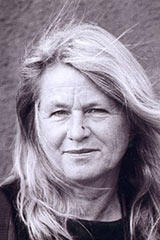
Gretel Ehrlich

Gretel Ehrlich Quotes

Writer

Filter quotes by topic

Famous Gretel Ehrlich Quotes

“It was spring, and while my new house was cramped and humble, it was on the sand and the ocean still came to the front door. At dawn I'd roll out of bed, not even bothering to change clothes, and walk. Squalls came and went. Storm surges carried huge swells into the cove, and as rain inebriated the coast, the thick stub of a rainbow pushed out of the sea like a green thumb on the horizon. After, the dark blue sheet of water turned metallic, and I wondered: What in nature is not a mirror, does not give back a true image of mind?”

“So many of the men who came to the West were southerners— men looking for work and a new life after the Civil War—that chivalrousness and strict codes of honor were soon thought of as western traits. There were very few women in Wyoming during territorial days, so when they did arrive (some as mail-order brides from places like Philadelphia) there was a standoffishness between the sexes and a formality that persists now. Ranchers still tip their hats and say, "Howdy, ma'am" instead of shaking hands with me. Even young cowboys are often evasive with women. It's not that they're Jekyll and Hyde creatures—gentle with animals and rough on women—but rather, that they don't know how to bring their tenderness into the house and lack the vocabulary to express the complexity of what they feel.”

“That's why I spend so much time on what we call attitude, which, when you look at it, is really a complex, mind-body phenomonen. I really don't believe in medical miracles. People should give themselves more credit for their healing abilities. A doctor participates in the process , that's all. One of the best things a doctor can do is encourage a tough, fighting spirit and a sense of humor. Those people almost always do better than the others.”

“In the evenings the boat spun on its anchor and mist fell to its knees, raining directly into seawater. Trees grew on red buoys, bald eagles lifted out of dark trunks like white-steepled chapels, a raven ate a crab in the boat's crow's nest, and schools of herring, who sometimes migrate in rolled-up balls five or six inches thick, broad-jumped the incoming tide.”

“We are often like rivers: careless and forceful, timid and dangerous, lucid and muddied, eddying, gleaming, still. Lovers, farmers, and artists have one thing in common, at least - a fear of 'dry spells,' dormant periods in which we do no blooming, internal droughts only the waters of imagination and psychic release can civilize.”

“A black-crowned night heron stood on an apron of wet sand, looking across the channel. The feather plume at the back of his head lifted in a faint breeze. Out there the channel churned its cyclonic eddies counterclockwise. Schools of anchovies, halibut, and sea bass came and went: silver flashes, small storms that well up from the inside of the sea but are short-lived, like lightning.”

“As fog moved to the mainland I heard a flock of birds fly over. They sounded like a dress rustling, a dress being unfastened and dropping to the floor. Fog came unpinned like hair. On the beach cliffs, great colonies of datura - jimson weed - with their white trumpet flowers, looked like brass bands.”

“All that's known is this: there is no central processor, no single computer. Nothing that simple. Millions of neurons process information simultaneously and in parallel, not linearly, but the actual chemistry and electrical properties of that integrative process are still being mapped. Even so, it seems odd that during the evolution of brain circuitry and thinking, the ability to understand itself did not get wired in. Such built-in innocence seems like a terrible oversight.”

“June marked the end of spring on California's central coast and the beginning of five months of dormancy that often erupted in fire. Mustard's yellow robes had long since turned red, then brown. Fog and sun mixed to create haze. The land had rusted. The mountains, once blue-hued with young oaks and blooming ceanosis, were tan and gray. I walked across the fallen blossoms of five yucca plants: only the bare poles of their stems remained to mark where their lights had shone the way.”

“Fog rolled in like a form of sorrow. To live exiled from a place you have known intimately is to experience sensory deprivation. A wide-awake coma. ... The sea was a memory bank into which everything fell and was lost. I dove in but came out empty-handed.”

“Thirty years ago, my sister, Gale (so named because a gale hit Boston Harbor the night she was born), some friends and I stole a boat in the middle of the night and sailed it out of the Santa Barbara harbor. Suddenly we were becalmed and the current began pushing us toward the breakwall. With no running lights and no power, we were dead in the water. Out of that darkness a steel hull appeared: it was the local Coast Guard cutter. My father, stern-faced and displeased, stood in the bow.”

“History is not truth versus falsehoods, but a mixture of both, a mélange of tendencies, reactions, dreams, errors, and power plays. What's important is what we make of it; its moral use. By writing history, we can widen readers' thinking and deepen their sympathies in every direction. Perhaps history should show us not how to control the world, but how to enlarge, deepen, and discipline ourselves.”

“There was not one cause for our internment, but many - a deep-seated racial prejudice working on top of fear, distrust, and greed. So how is one to say exactly where history begins or ends? It is all slow oscillations, curves, and waves which take so long to reveal themselves ... like watching a tree grow.”

“I designed furniture that pulled apart, folded, and broke down into neat stacks. Since arriving in California, I had moved four times and it looked as if I would move again. Was it the land running under my feet or my feet running over the land?”

“Survival is as much a matter of grace as fight. The expression, 'grace under pressure' implies the attainment of equanimity and equilibrium. The fundamental durability of the human body surprises us because the pain can be so intense - yet pain is often transient and hides the tremendous effforts the body is engaged in to heal itself.”

“How odd it is that sewing is thought to be 'women's work' when surgeons, sailors, and cowboys sew too. Yet how many female thoracic surgeons are there? And if precision motor activities are thought to be performed better by women, why wouldn't they make better surgeons too?”

“If anything is endemic to Wyoming it is wind. This big room of space is swept out daily, leaving a bone yard of fossils, agates, and carcasses in every stage of decay. Though it was water that initially shaped the state, wind is the meticulous gardener, raising dust and pruning the sage.”

“Love life first, then march through the gates of each season; go inside nature and develop the discipline to stop destructive behavior; learn tenderness toward experience, then make decisions based on creating biological wealth that includes all people, animals, cultures, currencies, languages, and the living things as yet undiscovered; listen to the truth the land will tell you; act accordingly.”

“To trace the history of a river or a raindrop is also to trace the history of the soul, the history of the mind descending and arising in the body. In both, we constantly seek and stumble upon divinity, which like feeding the lake, and the spring becoming a waterfall, feeds, spills, falls, and feeds itself all over again.”