Quotessence
Home / Quotes / Quote by John Ruskin

Quote by John Ruskin

“In all things that live there are certain irregularities, and deficiencies which are not only signs of life, but sources of beauty. No human face is exactly the same in its lines on each side, no leaf perfect in its lobes, no branch in its symmetry.”

Quote by John Ruskin

Work

On the nature of Gothic architecture: and herein of the true functions of the workman in art. Being the greater part of the 6th chapter of the 2nd vol. of 'Stones of Venice'. [48 p.].

'On the nature of Gothic architecture' is a scholarly examination of the Gothic architectural style, focusing on the craftsmanship and the significance of the artisan's role in creating art. The text is a selection from the renowned 'Stones of Venice', which is a comprehensive study of the city's architectural heritage. The book consists of 48 pages and offers a detailed analysis of Gothic architecture and the contributions of artisans within this field. more

Author
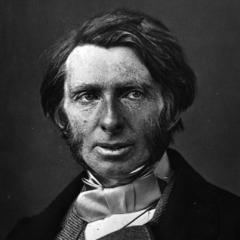
John Ruskin
John Ruskin

John Ruskin was an influential British art critic, writer, and social critic. Known for his profound insights into art, architecture, and social issues, he had a significant impact on the aesthetics and culture of the Victorian era. more

You May Also Like

“There is a certain period of the soul-culture when it begins to interfere with some of characters of typical beauty belonging to the bodily frame, the stirring of the intellect wearing down the flesh, and the moral enthusiasm burning its way out to heaven, through the emaciation of the earthen vessel; and there is, in this indication of subduing the mortal by the immortal part, an ideal glory of perhaps a purer and higher range than that of the more perfect material form. We conceive, I think, more nobly of the weak presence of Paul than of, the fair and ruddy countenance of David.”

“Christian faith is a grand cathedral, with divinely pictured windows. Standing without you see no glory, nor can possibly imagine any. Nothing is visible but the merest outline of dusky shapes. Standing within all is clear and defined; every ray of light reveals an army of unspeakable splendors.”

“Men have commonly more pleasure in the criticism which hurts than in that which is innocuous, and are more tolerant of the severity which breaks hearts and ruins fortunes than of that which falls impotently on the grave.”

“Courage, so far as it is a sign of race, is peculiarly the mark of a gentleman or a lady; but it becomes vulgar if rude or insensitive, while timidity is not vulgar, if it be a characteristic of race or fineness of make. A fawn is not vulgar in being timid, nor a crocodile "gentle" because courageous.”

“Our respect for the dead, when they are just dead, is something wonderful, and the way we show it more wonderful still. We show it with black feathers and black horses; we show it with black dresses and black heraldries; we show it with costly obelisks and sculptures of sorrow, which spoil half of our beautiful cathedrals. We show it with frightful gratings and vaults, and lids of dismal stone, in the midst of the quiet grass; and last, and not least, we show it by permitting ourselves to tell any number of falsehoods we think amiable or credible in the epitaph.”

“As long as there are cold and nakedness in the land around you, so long can there be no question at all but that splendor of dress is a crime. In due time, when we have nothing better to set people to work at, it may be right to let them make lace and cut jewels; but as long as there are any who have no blankets for their beds, and no rags for their bodies, so long it is blanket-making and tailoring we must set people to work at, not lace.”