“Valuation is vague and arbitrary, when there is no assurance that it will be generally acquiesced in by others.”
Quote by Jean-Baptiste Say
Work
A treatise on political economy: or, The production, distribution and consumption of wealth
A comprehensive examination of the economic systems and theories surrounding the generation, distribution, and consumption of wealth, offering insights into the functioning of economies. more
Author
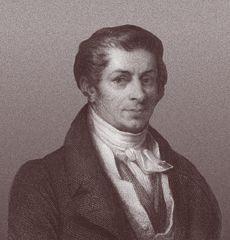
Jean-Baptiste Say
Jean-Baptiste Say, an economist, was born on January 5, 1767, and died on November 15, 1832. He was one of the representative figures of the classical school of economics and is known for his profound understanding of the market economy and his advocacy for free economy. more
You May Also Like
Source: A treatise on political economy
Source: A treatise on political economy: or, The production, distribution and consumption of wealth
Source: A Treatise on Political Economy; Or, The Production, Distribution, and Consumption of Wealth
Source: A treatise on political economy: or, The production, distribution and consumption of wealth
Source: A treatise on political economy; or, The production, distribution, and consumption of wealth. Tr. by C.R. Prinsep, with notes
Source: History of Economic Theory: The Selected Writings of Adam Smith, Jean-Baptiste Say, and J.R. McCulloch
Source: A Treatise on Political Economy; Or, The Production, Distribution, and Consumption of Wealth
Source: A treatise on political economy, or, the production, distribution, and consumption of wealth
Source: History of Economic Theory: The Selected Writings of Adam Smith, Jean-Baptiste Say, and J.R. McCulloch