Quotessence
Home / Quotes / Quote by Edward Abbey

Quote by Edward Abbey

Work

A Voice Crying in the Wilderness

This book is a narrative set against the backdrop of a barren wilderness, delving into the struggles and resilience of its characters. The story examines the human spirit's capacity to endure and find meaning in the face of adversity. more

Author
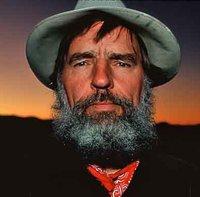
Edward Abbey
Edward Abbey

Edward Abbey was an American author known for his naturalist works and advocacy for environmental protection. His writings often take the desolate wilderness of the American Southwest as a backdrop, profoundly revealing the relationship between humans and nature. Abbey's writing style is unique, filled with humor and satire, and has had a profound impact on later generations. more

You May Also Like

“There have been joys too great to be described in words, and there have been griefs upon which I have not dared to dwell, and with these in mind I say, climb if you will, but remember that courage and strength are naught without prudence, and that a momentary negligence may destroy the happiness of a lifetime. Do nothing in haste, look well to each step, and from the beginning think what may be the end.”

“In a sense everything that is exists to climb. All evolution is a climbing towards a higher form. Climbing for life as it reaches towards the consciousness, towards the spirit. We have always honored the high places because we sense them to be the homes of gods. In the mountains there is the promise of... something unexplainable. A higher place of awareness, a spirit that soars. So we climb... and in climbing there is more than a metaphor; there is a means of discovery.”

“Climbing is the lazy man's way to enlightenment. It forces you to pay attention, because if you don't, you won't succeed, which is minor - or you may get hurt, which is major. Instead of years of meditation, you have this activity that forces you to relax and monitor your breathing and tread that line between living and dying. When you climb, you always are confronted with the edge. Hey, if it was just like climbing a ladder, we all would have quit a long time ago.”

“To put yourself into a situation where a mistake cannot necessarily be recouped, where the life you lose may be your own, clears the head wonderfully. It puts domestic problems back into proportion and adds an element of seriousness to your drab, routine life. Perhaps this is one reason why climbing has become increasingly hard as society has become increasingly, disproportionately, coddling.”

“The bizarre trend in mountaineers is not the risk they take, but the large degree to which they value life. They are not crazy because they don't dare, they're crazy because they do. These people tend to enjoy life to the fullest, laugh the hardest, travel the most, and work the least.”

“I believe that the ascent of mountains forms an essential chapter in the complete duty of man, and that it is wrong to leave any district without setting foot on its highest peak.”

“Some mountaineers are proud of having done all their climbs without bivouac. How much they have missed ! And the same applies to those who enjoy only rock climbing, or only the ice climbs, onyl the ridges or faces. We should refuse none of the thousands and one joys that the mountains offer us at every turn. We should brush nothing aside, set no restrictions. We should experience hunger and thirst, be able to go fast, but also to go slowly and to contemplate.”

“The body's habituation to walking as normal stems from the good olddays. It was the bourgeois form of locomotion: physicaldemythologization, free of the spell of hieratic pacing, rooflesswandering, breathless flight. Human dignity insisted on the right towalk, a rhythm not extorted from the body by command or terror. Thewalk, the stroll, were private ways of passing time, the heritage ofthe feudal promenade in the nineteenth century.”