Quotessence
Home / Quotes / Quote by Francis Schaeffer

Quote by Francis Schaeffer

Author

Francis Schaeffer
Francis Schaeffer

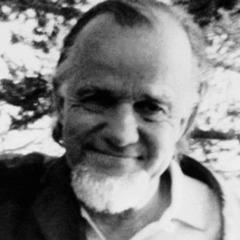
Francis Schaeffer (January 30, 1912 – May 15, 1984) was an American evangelical theologian, apologist, and writer, best known for founding L'Abri, a Christian community in Switzerland. Born in Pennsylvania, he initially embraced fundamentalism but later engaged with broader cultural issues. Schaeffer emphasized the integration of Christian worldview with philosophy, art, and society, critiquing modern secularism. His works, such as 'Escape from Reason' and 'The God Who Is There,' address spiritual crises of modern individuals. Through L'Abri, he influenced countless intellectuals and seekers. Schaeffer's legacy endures in evangelical cultural criticism and apologetics. more

You May Also Like

“The Gospel writers are not really interested primarily in the facts of the birth but in the significance, the meaning for them of that birth just as the people who love us are not really interested primarily in the facts of our births but in what it meant to them when we were born and how for them the world was never the same again, how their whole lives were changed with new significance.”

“Your life and my life flow into each other as wave flows into wave, and unless there is peace and joy and freedom for you, there can be no real peace or joy or freedom for me. To see reality-not as we expect it to be but as it is-is to see that unless we live for each other and in and through each other, we do not really live very satisfactorily; that there can really be life only where there really is, in just this sense, love.”

“Christianity is not just involved with "salvation", but with the total man in the total world. The Christian message begins with the existence of God forever, and then with creation. It does not begin with salvation. We must be thankful for salvation, but the Christian message is more than that. Man has a value because he is made in the image of God.”

“Her library would have been valuable to a bibliophile except she treated her books execrably. I would rarely open a volume that she had not desecrated by underlining her favorite sections with a ball-point pen. Once I had told her that I would rather see a museum bombed than a book underlined, but she dismissed my argument as mere sentimentality. She marked her books so that stunning images and ideas would not be lost to her.”