“Some of my relatives held on to imagined memories the way homeless people hold onto lottery tickets. Nostalgia was their crack cocaine, if you will, and my childhood was littered with the consequences of their addiction : unserviceable debts, squabbles over inheritances, the odd alcoholic or suicide.”
Quote by Mohsin Hamid
Work
The Reluctant Fundamentalist
In this thought-provoking novel, the protagonist, a successful Pakistani businessman living in the United States, finds himself at the center of a shifting political landscape following the September 11 attacks. The story unfolds through a series of conversations with a mysterious American at a Lahore café, as the protagonist reflects on his journey from a life of assimilation to one of alienation and resistance. The novel delves into the challenges of maintaining cultural identity in a changing world and the impact of political events on individual lives. more
Author
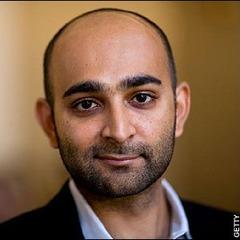
Mohsin Hamid
Mohsin Hamid is a Pakistani-British writer born in Karachi in 1971. His works often explore themes of globalization, identity, and modernity. Hamid's debut novel, 'The Reluctant Fundamentalist,' published in 2001, received widespread acclaim and earned him numerous awards. His other notable works include 'How to Get Filthy Rich in Rising Asia' and 'The Reluctant Fundamentalist'. more
You May Also Like
Source: Red Dragon
Source: The Lover's Dictionary: A Novel
Source: The Lover's Dictionary: A Novel
“If there was one thing I refused to be, it was an insignificant footnote in some boy's history.”
“People are afraid to die, and even more afraid to live.”
Source: God, Creation, and Tools for Life