Quotessence
Home / Quotes / Quote by Herbert Read

Quote by Herbert Read

“Intellect begins with the observation of nature, proceeds to memorize and classify the facts thus observed, and by logical deduction builds up that edifice of knowledge properly called science But admittedly we also know by feeling, and we can combine the two faculties, and present knowledge in the guise of art.”

Quote by Herbert Read

Work

Selected writings: poetry and criticism

This book compiles a selection of poetry and critical essays, showcasing the author's work in both creative and analytical forms. more

Author
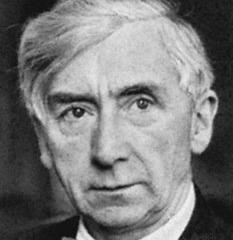
Herbert Read
Herbert Read

Herbert Read was a British poet, critic, and philosopher, known for his contributions to aesthetics and advocacy for the arts. His work often delved into themes of social justice and the role of the artist in society. more

You May Also Like

“Art is not and never has been subordinate to moral values. Moral values are social values; aesthetic values are human values. Morality seeks to restrain the feelings; art seeks to define them by externalizing them, by giving them significant form. Morality has only one aim - the ideal good; art has quite another aim - the objective truth... art never changes.”

“Sensibility... is a direct and particular reaction to the separate and individual nature of things. It begins and ends with the sensuous apprehension of colour, texture and formal relations; and if we strive to organize these elements, it is not with the idea of increasing the knowledge of the mind, but rather in order to intensify the pleasure of the senses.”

“The peculiarity of sculpture is that it creates a three-dimensional object in space. Painting may strive to give on a two-dimensional plane, the illusion of space, but it is space itself as a perceived quantity that becomes the peculiar concern of the sculptor. We may say that for the painter space is a luxury; for the sculptor it is a necessity.”

“The classicist, and the naturalist who has much in common with him, refuse to see in the highest works of art anything but the exercise of judgement, sensibility, and skill. The romanticist cannot be satisfied with such a normal standard; for him art is essentially irrational - an experience beyond normality, sometimes destructive of normality, and at the very least evocative of that state of wonder which is the state of mind induced by the immediately inexplicable.”