Quotessence
Home / Quotes / Quote by Isabel Allende

Quote by Isabel Allende

“The upper middle class and the economic right, who had favored the coup, were euphoric. At first they were a little shocked when they saw the consequences of their action; they had never lived in a dictatorship and did not know what it was like. They thought the loss of democratic freedoms would be temporary and that it was possible to go without individual or collective rights for a while so long as the regime respected the tenets of free enterprise.”

Quote by Isabel Allende

Work

The House of the Spirits

Isabel Allende's 'The House of the Spirits' is a sweeping narrative that intertwines the personal and the political. The story follows the Trueba family, highlighting their struggles and triumphs in the face of historical events. The novel is renowned for its use of magical realism, blending the supernatural with the everyday, and its vivid portrayal of the political landscape of Latin America. more

Author
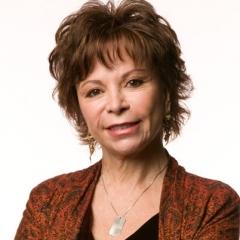
Isabel Allende
Isabel Allende

Isabel Allende, born on August 2, 1942, is a renowned Chilean writer known for her magical realism style. Her works have gained widespread popularity, with notable titles including 'Love in the Time of Cholera' and 'The House of the Spirits'. more

You May Also Like

“The old imperialism had the ‘advantage’ that the leading metropolitan power of the time, Britain, could keep its economy open to the goods of the then newly-industrializing countries, without getting indebted (on the contrary it became the largest capital exporter in the years before the First World War). For at least four decades up to 1928, India had the second largest export surplus in the world (second only to the USA); and this despite the imports of goods that caused domestic de-industrialization. But this export surplus was entirely appropriated by Britain not only to pay for its current account deficit with continental Europe, North America and regions of recent European settlement, but also to allow it to export capital to these regions.”

“Page 61-2 ... Rome expanded rapidly ... and became master over the entire Mediterranean Basin. It then had unlimited resources in terms of land, money, and slaves. It collected taxes or tribute throughout its empire and was able to transfer to the central capital massive quantities of foodstuffs and manufactured items. The peasants and the artisans of Italy saw their economic base disappear as this Mediterranean economy was "globalized" by the political domination of Rome. The society was polarized between, on the one hand, a mass of economically useless plebeians and, on the other, a predatory plutocracy. A minority gorged with wealth oversaw the remaining proletarianized population. The middle-classes collapsed, a process that brought about the end of the republic and the beginning of the political form known as "empire" in conformity with the observations made by Aristotle about the importance of intermediate social classes for the stability of political systems. Since one could not eliminate the plebeians, intractable but geographically central as they were, they came to be nourished and distracted at the empire's expense with "bread and circuses." Page 64-5: The positive American trade balance, when only "advanced technology" is counted, dropped from 35 billion dollars in 1990 to 5 billion in 2001 and had disappeared entirely to become one more element in the overall trade deficit in January 2002. This fall in economic strength is not compensated for by the activities of American-based multinationals. Since 1998 the profits that they bring back into the country amount to less than what foreign companies that have set up shop in the United States are taking back to their own countries. Page 68: In conformity with classical economic theory, the general opening up of commercial exchange has brought about an increase in inequality throughout the world. This general exchange tends to introduce into each country the same disparities in revenue that exist at the level of the whole planet. ... The compression of worker revenues caused by free trade revives the traditional dilemma of capitalism that has now spread across the globe: low salaries do not allow for the absorption of increases in production. Page 17: In developed countries a new class is emerging that comprises roughly 20 percent of the population in terms of sheer numbers but controls about half of each nation's wealth. This new class has more and more trouble putting up with the constraint of universal suffrage.”

“For centuries England has relied on protection, has carried it to extremes, and has obtained satisfactory results from it. There is no doubt that it is to this system that it owes its present strength. After two centuries, England has found it convenient to adopt free trade because it thinks that protection can no longer offer it anything. Very well then, gentlemen, my knowledge of our country leads me to believe that within two hundred years, when America has gotten out of protection all that it can offer, it too will adopt free trade.”

“Dr. Wickramsinghe, I don't mean to insult, but what do we have in Sri Lanka? We have a small island nation the size of what, Belgium, that has been at war with itself since 1983. A sixteen-year civil war which shows no signs of abating. A tiny poor nation. What do you possibly have to offer anyone besides warmed-over wage slaves and more of the same?" ..."Listen, we support development. But there are some serious problems with the Sri Lankan way of life. I can assure you that there will be no entry into the WTO for Sri Lanka, nor any free trade agreements with the U.S., unless you enact some serious reforms. Tighten your fucking belt. I believe we have made it very clear that your grossly overfunded health and education will have to go.”

“A man must find time for himself. Time is what we spend our lives with. If we are not careful we find others spending it for us. . . . It is necessary now and then for a man to go away by himself and experience loneliness; to sit on a rock in the forest and to ask of himself, 'Who am I, and where have I been, and where am I going?' . . . If one is not careful, one allows diversions to take up one's time—the stuff of life.”

“As long as we lean on anything outside ourselves for support, we are going to be insecure. Most of us try to find support by leaning on all sorts of things - gold, books, learning, sensory stimulation - and if these things are taken away, we fall over. To the extent that we are dependent on these external supports, we grow weaker and more liable to upsets and misfortune.”

“Page 199: According to the U.S. Bureau of Economic Statistics, more than 20 percent of all imports to the United States come from foreign subsidiaries or affiliates of U.S. multinational corporations. … This is why American business is so adamantly opposed to tariffs—not fear of foreign retaliation, but fear of tariffs on products from American-owned industrial plantations.”

“Page 200: This school of thought might be called “free trade plus.” The United States will benefit from global free trade, these liberals argue, as long as the skills and productivity of American workers are upgraded. Higher skills translate into higher productivity, which will in turn translate into higher wages. Here a good theory falls victim to an evil fact: productivity has been going up in America, without resulting wage gains for American workers. The average productivity of American workers increased by more than 30 percent between 1977 and 1992, while the average real wage fell by 13 percent.”