Quotessence
Home / Quotes / Quote by Beverly Cleary

Quote by Beverly Cleary

Work

Ramona Quimby, age 8

This book follows Ramona Quimby, an eight-year-old girl with a vivid imagination and a knack for getting into mischief. It explores her experiences at school, her relationship with her family, and her struggles with fitting in. The story is told from Ramona's perspective, offering a unique and endearing look into the life of a young girl growing up. more
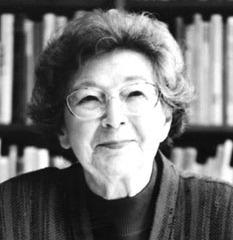
Author

Beverly Cleary
Beverly Cleary

Beverly Cleary is an American author renowned for her children's literature. Born on April 12, 1916, her works are characterized by their close connection to the lives of children and their humorous style, which has won the hearts of readers worldwide. more

You May Also Like

“When we consider the major role intimidation plays in this ideology, which was still at the peak of its popularity at the turn of the century, it is not surprising that Sigmund Freud had to conceal his surprising discovery of adults' sexual abuse of their children, a discovery he was led to by the testimony of his patients. He disguised his insight with the aid of a theory that nullified this inadmissible knowledge. Children of his day were not allowed, under the severest of threats, to be aware of what adults were doing to them. and if Freud had persisted in his seduction theory, he not only would have had his introjected parents to fear but would no doubt have been discredited, and probably ostracized, by middle-class society. In order to protect himself, he had to devise a theory that would preserve appearances by attributing all “evil”, guilt and wrongdoing to the child's fantasies. in which the parents served only as the objects of projection. We can understand why this theory omitted the fact that it is the parents who not only project their sexual and aggressive fantasies onto the child but also are able to act out these fantasies because they wield the power. It is probably thanks to this omission that many professionals in the psychiatric field, themselves the products of "poisonous pedagogy" have been able to accept the Freudian theory of drives, because it did not force them to question their idealized image of their parents. With the aid of Freud's drive and structural theories, they have been able to continue obeying the commandment they internalized in early childhood: "Thou shalt not be aware of what your parents are doing to you.”

“It is also a part of "poisonous pedagogy" to impart to the child from the beginning false information and beliefs that have been passed on from generation to generation and dutifully accepted by the young even though they are not only unproven but are demonstrably false. Examples of such beliefs are: 1. A feeling of duty produces love. 2. Hatred can be done away with by forbidding it. 3. Parents deserve respect simply because they are parents. 4. Children are undeserving of respect simply because they are children. 5. Obedience makes a child strong. 6. A high degree of self-esteem is harmful. 7. A low degree of self-esteem makes a person altruistic. 8. Tenderness (doting) is harmful. 9. Responding to a child's needs is wrong. 10. Severity and coldness are a good preparation for life. 11. A pretense of gratitude is better than honest ingratitude. 12. The way you behave is more important than the way you really are. 13. Neither parents nor God would survive being offended. 14. The body is something dirty and disgusting. 15. Strong feelings are harmful. 16. Parents are creatures free of drives and guilt. 17. Parents are always right.”