“Then the prophetess said to the witcher: "I shall give you this advice: wear boots made of iron, take in hand a staff of steel. Then walk until the end of the world. Help yourself with your staff to break the land before you and wet it with your tears. Go through fire and water, do not stop along the way, do not look behind you. And when the boots are worn, when your staff is blunt, once the wind and the heat has dried your eyes so that your tears no longer flow, then at the end of the world you may find what you are looking for and what you love... The witcher went through fire and water, he did not look back. He did not take iron boots or a staff of steel. He took only his sword. He did not listen to the words of prophets. And he did well because she was a bad prophet.”
Quote by Andrzej Sapkowski
Book:Czas pogardy
Work
Czas pogardy
Browse quotes and source details for this work. more
Author
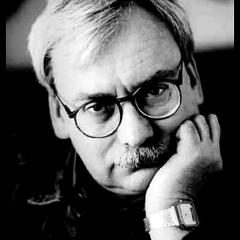
Andrzej Sapkowski
Andrzej Sapkowski is a Polish writer born on June 21, 1948. He is renowned for his fantasy novels, especially the 'The Witcher' series, which has been translated into multiple languages and adapted into games and television series. more
You May Also Like
Source: Seeker After Truth: A Handbook
Source: Last Days
“If we are to tempt fate, then let us not be cowards about it.”
Source: Inheritance
“Yes, she believed God loved her. But if this whole fiasco was His idea of love . . .”
Source: Valley of Dreams
Source: The German Ideology / Theses on Feuerbach / Introduction to the Critique of Political Economy
Source: Self-Portrait in a Convex Mirror
Source: Jude the Obscure
Source: The Hundred Lies of Lizzie Lovett
Source: Notable American Women
Source: The Four Swans