Quotessence
Home / Authors / Andrzej Sapkowski
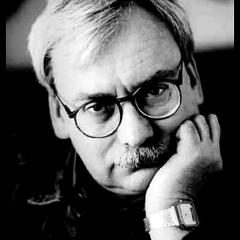
Andrzej Sapkowski

Andrzej Sapkowski Quotes

Writer

Filter quotes by topic

Famous Andrzej Sapkowski Quotes

“I'd like to remind everybody of another legend. It's an old, forgotten legend -- we've all probably heard it in our difficult childhoods. In this legend, the kings kept their promises. And we, poor vassals, are only bound to kings by the royal word: treaties, alliances, our privileges and fiefs all rely on it. And now? Are we to doubt all this? Doubt the inviolability of the king's word? Wait until it is worth as much as yesteryear's snow? If this is how things are to be, then a difficult old age awaits us after our difficult childhoods!”

“A most deplorable sight," she said, folding her arms across her chest. "Someone who has lost everything. You know, minstrel, it is interesting. Once, I thought it was impossible to lose everything, that something always remains. Always. Even in times of contempt, when naivety is capable of backfiring in the cruellest way, one cannot lose everything. But he... he lost several pints of blood, the ability to walk properly, partial use of his left hand, his witcher's sword, the woman he loves, the daughter he had gained by a miracle, his faith... Well, I thought, he must have been left with something. But I was wrong. He has nothing now. Not even a razor." Dandelion remained silent. The dryad did not move. "I asked if you had a hand in this," she began a moment later. "But I think there was no need. It's obvious you had a hand in it. It's obvious you are his friend. And if someone has friends, and he loses everything in spite of that, it's obvious the friends are to blame. For what they did, or for what they didn't do.”

“Why should I give up revenge? On behalf of what? Moral principles? And what of the higher order of things, in which evil deeds are punished? For you, a philosopher and ethicist, an act of revenge is bad, disgraceful, unethical and illegal. But I ask: where is the punishment for evil? Who has it and grants access? The Gods, in which you do not believe? The great demiurge-creator, which you decided to replace the gods with? Or maybe the law? [...] I know what evil is afraid of. Not your ethics, Vysogota, not your preaching or moral treaties on the life of dignity. Evil is afraid of pain, mutilation, suffering and at the end of the day, death! The dog howls when it is badly wounded! Writhing on the ground and growls, watching the blood flow from its veins and arteries, seeing the bone that sticks out from a stump, watching its guts escape its open belly, feeling the cold as death is about to take them. Then and only then will evil begin to beg, 'Have mercy! I regret my sins! I'll be good, I swear! Just save me, do not let me waste away!'. Yes, hermit. That is the way to fight evil! When evil wants to harm you, inflict pain - anticipate them, it's best if evil does not expect it. But if you fail to prevent evil, if you have been hurt by evil, then avenge him! It is best when they have already forgotten, when they feel safe. Then pay them in double. In triple. An eye for an eye? No! Both eyes for an eye! A tooth for a tooth? No! All their teeth for a tooth! Repay evil! Make it wail in pain, howling until their eyes pop from their sockets. And then, you can look under your feet and boldly declare that what is there cannot endanger anyone, cannot hurt anyone. How can someone be a danger, when they have no eyes? How can someone hurt when they have no hands? They can only wait until they bleed to death.”

“Don’t shout, Yen, don’t be aggressive. And don’t drag up that story from Vengerberg, we swore not to go back to it, after all. I don’t bear a grudge against you, Yen, I’m not reproaching you, am I? I know you can’t be judged by ordinary standards. And the fact that I’m saddened… the fact that I know I’m losing you… is cellular memory. The atavistic remnants of feelings in a mutant purged of emotion—”

“Then the prophetess said to the witcher: "I shall give you this advice: wear boots made of iron, take in hand a staff of steel. Then walk until the end of the world. Help yourself with your staff to break the land before you and wet it with your tears. Go through fire and water, do not stop along the way, do not look behind you. And when the boots are worn, when your staff is blunt, once the wind and the heat has dried your eyes so that your tears no longer flow, then at the end of the world you may find what you are looking for and what you love... The witcher went through fire and water, he did not look back. He did not take iron boots or a staff of steel. He took only his sword. He did not listen to the words of prophets. And he did well because she was a bad prophet.”

“Protecting people, saving their lives, how do you judge that; bad or good? Those fourteen on the hill? You on that there bridge? What were you doing? Good or bad?' 'I don't know' said Geralt with effort. 'I don't know, Yurga. Sometimes it seems to me that I know. And sometimes I have doubts. Would you like your son to have doubts like that?' 'Why not?' the merchant said gravely. 'He might as well. For it's a human and good thing.' 'What?' 'Doubts. Only evil, sir, never has any.”

“Yes, indeed" said the vampire, impervious to the derision. "Your mutated race is capable of regenerating its fingernails, toenails, hair and epidermis, but is unable to accept the fact that other races are more advanced in that respect. That inability is not the result of your primitiveness. Quite the opposite: it’s a result of egotism and a conviction in your own perfection. Anything that is more perfect than you must be a repulsive aberration. And repulsive aberrations are consigned to myths, for sociological reasons.”

“As I said, your view on religion is known to me, it’s never particularly bothered me and, no doubt, it won’t bother me in the future. I’m not a fanatic. You’ve a right to believe that we’re governed by Nature and the Force hidden within her. You can think that the gods, including my Melitele, are merely a personification of this power invented for simpletons so they can understand it better, accept its existence. According to you, that power is blind. But for me, Geralt, faith allows you to expect what my goddess personifies from nature: order, law, goodness. And hope.”

“I like elven legends, they are so captivating. What a pity humans don't have any legends like that. Perhaps one day they will? Perhaps they'll create some? But what would human legends deal with? All around, wherever one looks, there's greyness and dullness. Even things which begin beautifully lead swiftly to boredom and dreariness, to that human ritual, that wearisome rhythm called life.”

“Yes, this... Urcheon... speaks the truth. Roegner did swear to give him that which he did not expect. It looks as if our lamented king was an oaf as far as a woman's affairs are concerned, and couldn't be trusted to count to nine. He confessed the truth on his death-bed, because he knew what I'd do to him if he'd admitted it earlier. He knew what a mother, whose child is disposed of so recklessly, is capable of.”

“Why didn't you become a sorcerer, Geralt? Weren't you ever attracted by the Art? Be honest.' 'I will. I was.' 'Why, then, didn't you follow the voice of that attraction?' 'I decided it would be wiser to follow the voice of good sense.' 'Meaning?' 'Years of practice in the witcher's trade have taught me not to bite off more than I can chew. Do you know, Vilgefortz, I once knew a dwarf, who, as a child, dreamed of being an elf. What do you think; would he have become one had he followed the voice of attraction?”

“Emotions, whims and lies, fascinations and games. Feelings and their absence. Gifts, which may not be accepted. Lies and truth. What is truth? The negation of lies? Or the statement of a fact? And if the fact is a lie, what then is the truth? Who is full of feelings which torment him, and who is the empty carapace of a cold skull? Who? What is truth, Geralt? What is the essence of truth?’ ‘I don’t know, Yen. Tell me.’ ‘No,’ she said and lowered her eyes. For the first time. He had never seen her do that before. Never. ‘No,’ she repeated. ‘I cannot, Geralt. I cannot tell you that. That bird, begotten from the touch of your hand, will tell you. Bird? What is the essence of truth?’ ‘Truth,’ the kestrel said, ‘is a shard of ice.”

“Treaties are like marriage: they aren't entered in to with the thought of betrayal, and once they're concluded one shouldn't be suspicious. And if that doesn't suit somebody, they shouldn't get married. Because you can't become a cuckold without being a husband, but you'll admit that fear of wearing the horns is a pitiful and quite ridiculous justification for enforced celibacy.”

“The exception, as ever, was the children. Freed from the constraints of silence which had been enforced during the bard's performance, the children dashed into the woods with wild cries, and enthusiastically immersed themselves in a game whose rules were incomprehensible to all those who had bidden farewell to the happy years of childhood. Children of elves, dwarves, halflings, gnomes, half-elves, quarter-elves and toddlers of mysterious provenance neither knew nor recognised racial or social divisions. At least, not yet.”