Quotessence
Home / Quotes / Quote by Andrzej Sapkowski

Quote by Andrzej Sapkowski

Work

Czas pogardy

Browse quotes and source details for this work. more
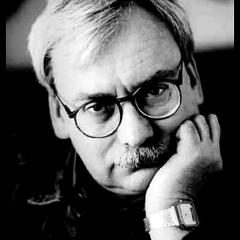
Author

Andrzej Sapkowski
Andrzej Sapkowski

Andrzej Sapkowski is a Polish writer born on June 21, 1948. He is renowned for his fantasy novels, especially the 'The Witcher' series, which has been translated into multiple languages and adapted into games and television series. more

You May Also Like

“Cruelly exploiting and slaughtering human beings is widely recognized as spiritually problematic, but the veal industry is not, battery cages are not, foie gras and the use of farrowing crates are not, debeaking and slaughter lines are not. How can this be? Anymal suffering is extreme on factory farms, massive numbers of premature deaths are the expected end, and both are sanctioned not only by the government but also by the masses—including those who affiliate with a particular religious tradition and take their religious commitments seriously. The reason for this cruelty and indifference is obvious: With human beings creating the rules, anymals are the last to be noticed and the most likely to be discarded or exploited. Consequently, wherever humanity suffers, anymals suffer yet more.”

“Men are shit. She has known this since Percy, who took her virginity on the sand dunes at Santa Cruz but never called her back for a third date. Since Jean-Claude, who let her fly from the country she loved and back to the one she hated, without ever thinking to follow. Since Lenny Lynden, who accepted Terra as her replacement as easily as pancakes instead of French toast. For as long as she has been a woman, Evelyn has understood the fundamental indifference of men.”

“The real question I am asking here is the one Marcuse asked in the sixties. How does a way of life break down? How does it break down. And Marcuse doesn’t give the pat Marxist answer, which means economically, and we ought to be glad that that pat Marxist answer is false because if a society could be driven to ruin by debt, you know, the way a lot of people said the Russians – the Soviet Union – fell because it was broke. Let’s hope that’s not true [laughs] since we are broke, let’s hope that’s false. As a generalisation, we had better hope it is false. How do they break down? Well, here there is an analogy – for me – between the social and the self under siege, in many ways. In many ways, not in a few, and some of the symptoms we see around us that our own lives are breaking down and the lives of our society is a generalised cynicism and scepticism about everything. I don’t know how to characterise this situation, I find no parallel to it in human history. The scepticism and cynicism about everything is so general, and I think it’s partly due to this thing I call banalisation, and it’s partly due to the refusal and the fear of dealing with complexity. Much easier to be a cynic than to deal with complexity. Better to say everything is bullshit than to try to look into enough things to know where you are. Better to say everything is just… silly, or pointless, than to try to look into systems of this kind of complexity and into situations of the kind of complexity and ambiguity that we have to deal with now.”

“However, I must admit that keeping myself to myself has not always been comforting. At times, I seemed to suffer spells of depression and loneliness, longing to become healthy again; of going out and facing a world of injustices, of misery, of widespread indifference.”