Quotessence
Home / Authors / Andrzej Sapkowski
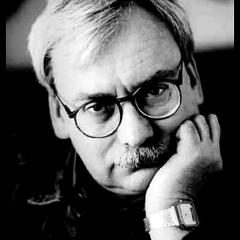
Andrzej Sapkowski

Andrzej Sapkowski Quotes

Writer

Filter quotes by topic

Famous Andrzej Sapkowski Quotes

“– В том-то и проблема, чтобы правильно рассадить гостей! Вы – гости, к тому же соратники господина виконта, стало быть, мне должно усадить вас ближе к голове стола… Промеж баронов. Но ведь не может быть, чтобы все вы, ваши милости и госпожи, оказались ровней, ибо так никогда не бывает, поскольку быть не может, чтобы все, повторяю, ровней были. Ежели кто из вас рангом либо родом выше, то должен при верхнем столе сидеть, при княгине… – Он, – ведьмак не колеблясь указал на вампира, который неподалеку в задумчивости любовался занимающим чуть ли не всю стену гобеленом, – граф. Но об этом – ша! Это тайна, покрытая мраком веков. – Понял! – Камергер чуть не захлебнулся от восторга. – В данных циркумстанциях… Я усажу его одесную графини Ноттурн и благородно урожденной тетушки госпожи, то бишь ее светлости княгини. – Не пожалеете ни вы, ни благородно урожденная тетушка. – У Геральта было совершенно каменное лицо. – Равных ему нет ни в смысле обычаев, ни в искусстве конверсации”

“I manage because I have to. Because I’ve no other way out. Because I’ve overcome the vanity and pride of being different. I’ve understood that they are a pitiful defence against being different. Because I’ve understood that the sun shines differently when something changes, but I’m not the axis of those changes. The sun shines differently, but it will continue to shine, and jumping at it with a hoe isn’t going to do anything. We’ve got to accept facts, elf. That’s what we’ve got to learn.”

“Your mother gives birth to you only once and only once do you die,' the witcher said calmly. 'An appropriate philosophy for a louse, don't you agree? And your longevity? I pity you, Filavandrel.' The elf raised his eyebrows. 'Why?' 'You're pathetic, with your little stolen sacks of seeds on pack horses, with your handful of grain, that tiny crumb thanks to which you plan to survive. And with that mission of yours which is supposed to turn your thoughts from imminent annihilation. Because you know this is the end. Nothing will sprout or yield crops on the plateaux, nothing will save you now. But you live long, and you will live very long in arrogant isolation, fewer and fewer of you, growing weaker and weaker, more and more bitter. And you know what'll happen then, Filavandrel. You know that desperate young men with the eyes of hundred-year-old men and withered, barren and sick girls like Toruviel will lead those who can still hold a sword and bow in their hands, down into the valleys. You'll come down into the blossoming valleys to meet death, wanting to die honourably, in battle, and not in sick beds of misery, where anaemia, tuberculosis and scurvy will send you. Then, long-living Aen Seidhe, you'll remember me. You'll remember that I pitied you. And you'll understand that I was right.' 'Time will tell who was right,' said the elf quietly. 'And herein lies the advantage of longevity. I've got a chance of finding out, if only because of that stolen handful of grain. You won't have a chance like that. You'll die shortly.”

“- Toi et ta grande cause... (Ignorant le troubadour, le sorceleur avança en titubant.) Ta grande cause, Filippa, et ton choix, c'est un blessé, poignardé de sang-froid, quand il a eu fini d'avouer ce que tu voulais savoir et qu'il m'était interdit de connaître. Ta grande cause, ce sont tous ces cadavres qui n'auraient pas dû être... Pardon, je me suis mal exprimé... Ce ne sont pas des cadavres... mais des causes de moindre importance ! - Je savais que tu ne comprendrais pas. - Non, en effet. Et je ne le comprendrai jamais. Mais je sais ce qu'il en est. Vos grandes affaires, vos guerres, votre combat pour sauver le monde... Votre fin qui justifie vos moyens... Tends l'oreille, Filippa. Tu entends ces voix, ces cris ? Ce sont de gros chats qui luttent pour une grande cause. Un règne absolu sur un tas d'ordures. Ce n'est pas rien, là-bas, on fait couler du sang et on s'étripe. Là-bas, c'est la guerre. Mais ces deux guerres, celle des chats et la tienne, m'importent incroyablement peu !”

“«In vita mia ho conosciuto tanti militari. Ho conosciuto marescialli, generali, voivodi ed etmani, trionfatori d'innumerevoli campagne e battaglie. Ho ascoltato i loro racconti e ricordi. Li ho visti chini su mappe sulle quali disegnavano linee di diversi colori, facendo piani e architettando strategie. In queste guerre di carta andava tutto liscio, funzionava tutto, era tutto chiaro e in un ordine esemplare. Così dev'essere, spiegavano i militari. Un esercito è innanzitutto ordine e disciplina. Un esercito non può esistere senza ordine e disciplina. È perciò tanto più strano constatare che, quanto a ordine e a disciplina, la vera guerra – e di vere guerre ne ho viste parecchie – ricorda come due gocce d'acqua un bordello in preda alle fiamme.»”

“«Ma non potevo vivere col vuoto che si era impadronito di me. A un tratto ho capito che non era la mancanza di una donna a provocare quel vuoto, ma la mancanza di ciò che provavo allora. Paradossale, vero? Non credo sia necessario che finisca, intuirai il seguito. Sono divenuto un mago. Per odio. E solo allora ho capito quanto ero stato sciocco. Avevo confuso il cielo con le stelle riflesse di notte sulla superficie di uno stagno.»”

“The blade, freed by the half-turn, floated after him, shining, drawing a fan of red droplets in its wake. The streaming raven-black hair floated in the air, floated, floated, floated... The head fell onto the gravel. There are fewer and fewer monsters? And I? What am I? Who's shouting? The birds? The woman in a sheepskin jacket and blue dress? The roses from Nazair? How quiet! How empty. What emptiness. Within me.”

“And so,' smiled the Witcher, 'I have no choice? I have to enter into a pact with you, a pact which should someday become the subject of a painting, and become a sorcerer? Give me a break. I know a little about the theory of heredity. My father, as I discovered with no little difficulty, was a wanderer, a churl, a troublemaker and a swashbuckler. My genes on the spear side may be dominant over the genes on the distaff side. The fact that I can swash a buckler pretty well seems to confirm that.”

“Gli uomini amano inventare mostri e mostruosità. Così hanno l'impressione di essere loro stessi meno mostruosi. Quando bevono come spugne, imbrogliano, rubano, picchiano le donne con le briglie, fanno morire di fame la vecchia nonna, colpiscono con la scure una volpe presa in trappola o riempiono di frecce l'ultimo unicorno rimasto sulla terra, amano pensare che più mostruosa di loro c'è sempre la Mora che s'intrufola nelle casupole all'alba. Allora si sentono in qualche modo il cuore più leggero. E trovano più facile vivere.”

“Nenneke felt the wound, washed it and began to curse. He already knew this routine by heart. She had started on the very first day, and had never failed to moan when she saw the marks left by the princess of Wyzim's talons. 'It's terrible! To let yourself be slashed like this by an ordinary striga. Muscles, tendons -- she only just missed your carotid artery! Great Melitele! Geralt, what's happening to you? How did she get so close to you? What did you want with her? To mount her?' He didn't answer, and smiled faintly.”

“But even during an event as exceptional as the world famous troubadour's just concluded performance, the travelers kept to themselves remaining in clearly delineated groups. Elves stayed with elves. Dwarvish craftsman gathered with their kin who would often hide to protect their merchant caravans and were armed to the teeth. The groups tolerated at best the gnome miners and halfling farmers who camped beside them. All non-humans were uniformly distant towards humans. The humans re-payed in kind but were not seem to mix amongst themselves either. Nobility looked down on the merchants and traveling salesman with open scorn. While soldiers and mercenaries, distanced themselves from shepherds and their reeking sheepskins. The few wizards and their disciples, kept themselves entirely apart from the others and bestowed their arrogance on everyone in equal parts. A tied knit, dark and silent group of peasants lurked in the background resembling a forest with their rakes, pitchforks and flails, poking above their heads. They were ignored by all. The exception, as ever was the children. Freed from the constraints of silence which have been enforced during the bards performance, the children dashed into the woods with wild cries and enthusiastically immersed themselves in a game whose rules were incomprehensible to all those who have bidden farewell to the happy years of childhood. Children of elves, dwarves, halflings, gnomes, half elves, quarter elves and toddlers of mysterious provenance, neither knew or recognized racial or social divisions. At least, not yet.”

“It's an invention, a fairy tale devoid of any sense, like all the legends in which good spirits and fortune tellers fulfill wishes. Stories like that are made up by poor simpletons, who can't even dream of fulfilling their wishes and desires themselves. I'm pleased you're not one of them, Geralt of Rivia. It makes you closer in spirit to me. If I want something, I don't dream of it—I act. And I always get what I want.”

“A morte é o nosso eterno companheiro. Sempre segue do nosso lado esquerdo, atrás, ao alcance da mão. É o único conselheiro sábio com o qual um guerreiro pode contar. Caso um guerreiro tenha a impressão de que tudo está rumando a um desfecho adverso, e tema ser aniquilado em pouco tempo, pode se virar para a morte e indagar sobre o verdadeiro estado das coisas. A morte lhe responderá, então, que está equivocado, e o único que conta é ser tocado por ela. "Porém, não pousei a mão em você", dirá.”

“Tu dici che qualcosa sta finendo, ma non è vero. Ci sono cose che non finiscono mai. Mi parli di sopravvivenza? Io lotto per la sopravvivenza. Perché Brokilon dura grazie alla mia lotta, perché gli alberi vivono più a lungo degli uomini, basta solo proteggerli dalle vostre scuri. Mi parli di re e principi. Chi sono? Quelli che conosco io sono scheletri bianchi che giacciono nelle necropoli di Craag An, nel fitto del bosco. In sepolcri di marmo, su mucchi di metallo giallo e ciottoli luccicanti. Ma Brokilon dura, gli alberi stormiscono sulle rovine dei palazzi, le radici spezzano il marmo. Il tuo Venzlav ricorda chi erano questi re? E tu lo ricordi, Gwynbleidd? In caso contrario, come puoi affermare che qualcosa stia finendo? Come fai a sapere chi è destinato allo sterminio e chi all'eternità? Cosa ti autorizza a parlare di destino? Sai almeno che cos'è il destino?”

“I visited towns and fortresses. I looked for proclamations nailed to posts at the crossroads. I looked for the words ‘Witcher urgently needed.’ And then there’d be a sacred site, a dungeon, necropolis or ruins, forest ravine or grotto hidden in the mountains, full of bones and stinking carcasses. Some creature which lived to kill, out of hunger, for pleasure, or invoked by some sick will. A manticore, wyvern, fogler, aeschna, ilyocoris, chimera, leshy, vampire, ghoul, graveir, werewolf, giant scorpion, striga, black annis, kikimora, vypper… so many I’ve killed. There’d be a dance in the dark and a slash of the sword, and fear and distaste in the eyes of my employer afterward.”

“Everyone has some kind of debt. Such is life. Debts and liabilities, obligations, gratitude, payments, doing something for someone. Or perhaps for ourselves? For in fact we are always paying ourselves back and not someone else. Each time we are indebted we pay off the debt to ourselves. In each of us lies a creditor and a debtor at once and the art is for the reckoning to tally inside us. We enter the world as a minute part of the life we are given, and from then on we are ever paying off debts, To ourselves. For ourselves. In order for the final reckoning to tally.”