Quotessence
Home / Quotes / Quote by Andrzej Sapkowski

Quote by Andrzej Sapkowski

“A morte é o nosso eterno companheiro. Sempre segue do nosso lado esquerdo, atrás, ao alcance da mão. É o único conselheiro sábio com o qual um guerreiro pode contar. Caso um guerreiro tenha a impressão de que tudo está rumando a um desfecho adverso, e tema ser aniquilado em pouco tempo, pode se virar para a morte e indagar sobre o verdadeiro estado das coisas. A morte lhe responderá, então, que está equivocado, e o único que conta é ser tocado por ela. "Porém, não pousei a mão em você", dirá.”

Quote by Andrzej Sapkowski

Work

Season of Storms

Browse quotes and source details for this work. more

Author

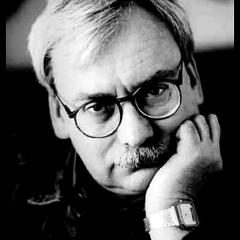
Andrzej Sapkowski
Andrzej Sapkowski

Andrzej Sapkowski is a Polish writer born on June 21, 1948. He is renowned for his fantasy novels, especially the 'The Witcher' series, which has been translated into multiple languages and adapted into games and television series. more

You May Also Like

“Also the natural sexual functions of establishing an intimate human contact frequently assume greater proportions. This is a well known fact about detached people for whom sexuality may be the only bridge to others, but it is not restricted to being an obvious substitute for human closeness. It shows also in the haste with which people may rush into sexual relations, without giving themselves a chance to find out whether they have anything in common or a chance to develop a liking and understanding. It is possible of course that an emotional relatedness may evolve later on. But more often than not it does not do so because usually the initial rush itself is a sign of their being too inhibited to develop a good human relationship.”

“The declining of responsibility for the self can also be hidden behind a pseudo-objectivity. A patient may make astute observations about himself and give a fairly accurate report of what he dislikes in himself. On the surface it seems as though he is perceptive and honest about himself. But "he" may be merely the intelligent observer of a fellow who is inhibited, fearful, or arrogantly demanding. Hence, since he is not responsible for the fellow he observes, the hurt to his pride is cushioned—all the moreso because the flashlight of his pride is focused on his faculty for keen observations.”

“The red indicator light just came on. I'm looking at the run-time error report. It's like a mathematically precise way of saying, This is not how you do this, man. Meaning life, I suppose. It's computer for Hey, buddy, you are massively bungling this up. I know it. I know it better than anyone. I don't need silicon wafers with a slightly neurotic interface to tell me that.”

“Patients in therapy all begin by protesting, “I want to be good.” If they cannot accomplish this, it is only because they are “inadequate,” can’t control themselves, are too anxious, or suffer from unconscious impulses. Being neurotic is being able to act badly without feeling responsible for what you do. The therapist must try to help the patient to see that he is exactly wrong, that is, that he is lying when he says he wants to be good. He really wants to be bad. Mortality is an empirical issue. Worse yet, he wants to be bad but to have an excuse for his irresponsibility, to be able to say, “But I can’t help it.”