Quotessence
Home / Quotes / Quote by Andrzej Sapkowski

Quote by Andrzej Sapkowski

“I visited towns and fortresses. I looked for proclamations nailed to posts at the crossroads. I looked for the words ‘Witcher urgently needed.’ And then there’d be a sacred site, a dungeon, necropolis or ruins, forest ravine or grotto hidden in the mountains, full of bones and stinking carcasses. Some creature which lived to kill, out of hunger, for pleasure, or invoked by some sick will. A manticore, wyvern, fogler, aeschna, ilyocoris, chimera, leshy, vampire, ghoul, graveir, werewolf, giant scorpion, striga, black annis, kikimora, vypper… so many I’ve killed. There’d be a dance in the dark and a slash of the sword, and fear and distaste in the eyes of my employer afterward.”

Quote by Andrzej Sapkowski

Work

The Last Wish

Browse quotes and source details for this work. more

Author

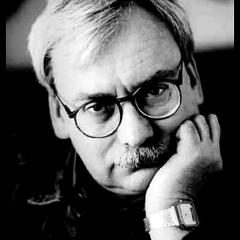
Andrzej Sapkowski
Andrzej Sapkowski

Andrzej Sapkowski is a Polish writer born on June 21, 1948. He is renowned for his fantasy novels, especially the 'The Witcher' series, which has been translated into multiple languages and adapted into games and television series. more

You May Also Like

“Deeply rooted in Celtic tradition, folklore, and mythology, fairies occupy a unique space within the realm of mythical creatures. Unlike iconic horror figures like vampires, werewolves, and zombies, fairies aren’t typically categorized as outright malevolent beings. In fact, their nature is multifaceted, as they are just as likely to grant wishes and bestow blessings as they are to mete out malicious retribution.”

“One of Hellenistic Jewry's signature achievements was the Septuagint, the translation of Tanakh into Koine (common) Greek. Compiled between the third and first centuries BCE, it almost certainly represents the work of Alexandrian Jewry, who needed scripture in Greek because they no longer spoke or wrote Hebrew. The Septuagint makes some formal changes, reordering books and including new material. Its existence offers witness to the religious power that Jews in the last centuries BCE were according written texts, a significant moment in the process by which Jewish identity embraced Torah and Judaism became a "religion of the book." Even so, the Septuagint has arguably had a greater abiding significance for Christianity than for Judaism. The Old Testament used it, rather than Tanakh, for a basis; New Testament writers quoted it (rather than Hebrew versions). Catholic and Orthodox Christians would accept its additions as a second set of fully authoritative (deuterocanonical) books. Most Protestants would not, although some printed them in a separate section of their Bibles. The early Church forged its principal doctrines in conversation with it. The legend that seventy-two translators "harmoniously" produced identical copies has a Christian provenance: Epiphanius, a fourth-century bishop who defended the Septuagint's superiority against later Jewish revisions. As its importance for Christians rose, Jews abandoned it to assert the sole legitimacy of the Hebrew text.”