Quotessence
Home / Quotes / Quote by Judith Lewis Herman

Quote by Judith Lewis Herman

“La respuesta habitual a las atrocidades es borrarlas de la conciencia. Ciertas violaciones de! orden social son demasiado terribles como para pronunciarlas en voz alta: ese es el significado de la palabra impronun~ ciable.”

Quote by Judith Lewis Herman

Work

Trauma and recovery

This book delves into the profound effects of trauma on individuals, offering a nuanced understanding of the recovery process. It examines the psychological, emotional, and social implications of trauma, and discusses therapeutic methods and support systems that aid in recovery. The author provides a detailed analysis of trauma and recovery, drawing on case studies and research findings to offer practical guidance for both professionals and individuals seeking to understand and cope with trauma. more
Author

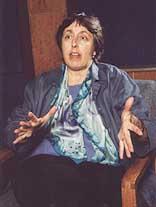
Judith Lewis Herman
Judith Lewis Herman

Judith Lewis Herman is an American author renowned for her work in the field of psychological trauma. Her writings delve deeply into the impact of post-traumatic stress disorder (PTSD) and the effects of traumatic experiences on individuals and society. more

You May Also Like

“...At the same time, something odd was happening to my ability to converse. I had always enjoyed engaging in arguments, regardless of topic. I regarded them as a sort of game (not that this is in any way unique). Suddenly, however, I couldn't talk—more accurately, I couldn't stand listening to myself talk . I started to hear a “voice” inside my head, commenting on my opinions. Every time I said something, it said something— something critical. The voice employed a standard refrain, delivered in a somewhat bored and matter-of-fact tone: You don't believe that. That isn't true. You don't believe that. That isn't true. The “voice” applied such comments to almost every phrase I spoke. I couldn't understand what to make of this. I knew the source of the commentary was part of me, but this knowledge only increased my confusion. Which part, precisely, was me— the talking part or the criticizing part ? If it was the talking part, then what was the criticizing part? If it was the criticizing part—well, then: how could virtually everything I said be untrue? In my ignorance and confusion, I decided to experiment. I tried only to say things that my internal reviewer would pass unchallenged. This meant that I really had to listen to what I was saying, that I spoke much less often, and that I would frequently stop, midway through a sentence, feel embarrassed, and reformulate my thoughts. I soon noticed that I felt much less agitated and more confident when I only said things that the “voice” did not object to. This came as a definite relief. My experiment had been a success; I was the criticizing part. Nonetheless, it took me a long time to reconcile myself to the idea that almost all my thoughts weren't real, weren't true—or, at least, weren't mine. All the things I “believed” were things I thought sounded good, admirable, respectable, courageous. They weren't my things, however—I had stolen them. Most of them I had taken from books. Having “understood” them, abstractly, I presumed I had a right to them—presumed that I could adopt them, as if they were mine: presumed that they were me . My head was stuffed full of the ideas of others; stuffed full of arguments I could not logically refute. I did not know then that an irrefutable argument is not necessarily true, nor that the right to identify with certain ideas had to be earned.”