Quotessence
Home / Quotes / Quote by Gustav Mahler

Quote by Gustav Mahler

“The dear earth everywhere blossoms in spring and grows green anew! Everywhere and forever blue is the horizon! Forever ... Forever ...”

Quote by Gustav Mahler

Author
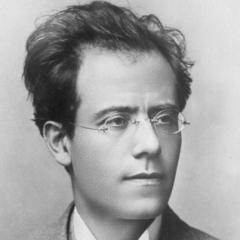
Gustav Mahler
Gustav Mahler

Gustav Mahler, born on July 7, 1860 in Austria and died on May 18, 1911, was an outstanding composer. Known for his symphonies and choral works, Mahler's music integrated classical, romantic, and national elements, profoundly influencing 20th-century music. more

You May Also Like

“Kitsch deprives feeling of its cost, and therefore of its reality; desecration augments the cost of feeling, and so frightens us away from it. The remedy for both states of mind is suggested by the thing that they each deny, which is sacrifice. Konstanze and Belmonte in Mozart’s opera are ready to sacrifice themselves for each other, and this readiness is the proof of their love: all the beauties of the opera arise from the constant presentation of this proof. The deaths that occur in real tragedies are bearable to us because we see them under the aspect of sacrifice. The tragic hero is both self-sacrificed and a sacrificial victim; and the awe that we feel at his death is in some way redemptive, a proof that his life was worthwhile. Love and affection between people is real only to the extent that it prepares the way for sacrifice—whether the petits soins that bind Marcel to Saint Loup, or the proof offered by Alcestis, who dies for her husband. Sacrifice is the core of virtue, the origin of meaning and the true theme of high art. Sacrifice can be avoided, and kitsch is the great lie that we can both avoid it and retain its comforts. Sacrifice can also be made meaningless by desecration. But, when sacrifice is present and respected, life redeems itself; it becomes an object of contemplation, something that ‘bears looking at’, and which attracts our admiration and our love. This connection between sacrifice and love is presented in the rituals and stories of religion. It is also the recurring theme of art. When, in the carnage of the Great War, poets tried to make sense of the destruction that lay all around, it was in full consciousness that kitsch merely compounded the fault. Their effort was not to deny the horror, but to find a way of seeing it in sacrificial terms. From this effort were born the war poems of Wilfred Owen and, much later, the War Requiem of Benjamin Britten. So there, if we can find our way to it, is the remedy. It is a remedy that cannot be achieved through art alone. In the words of Rilke’s ‘Archaic Torso of Apollo’: ‘you must change your life’. Beauty is vanishing from our world because we live as though it did not matter; and we live that way because we have lost the habit of sacrifice and are striving always to avoid it. The false art of our time, mired in kitsch and desecration, is one sign of this.”

“It is the subject of the will, i.e., his own volition, which fills the consciousness of the singer, often as a released and satisfied desire ; (joy), but still oftener as an inhibited desire ( grief), always as an affect, a passion, a moved state of mind. Besides this, however, and along with it, by the sight of surrounding nature, the singer becomes conscious of himself as the subject of pure will-less knowing, whose unbroken blissful peace now appears, in contrast to the stress of desire, which-is always restricted and always needy. The feeling of this contrast, this alternation, is really what the song as a whole expresses and what principally constitutes the lyrical state. In it pure knowing comes to us as it were to deliver us from willing and its strain; we follow, but only for moments; willing, the remembrance of our own personal ends, tears us anew from peaceful contemplation; yet ever again the next beautiful environment in which pure will-less knowledge presents itself to us lures us away from willing. Therefore, in the song and the lyrical mood, willing (the personal interest of the ends) and pure perception of the environment are wonderfully mingled; connections between them are sought and imagined; the subjective mood, the affection of the will, imparts its own hue to the perceived environment, and vice versa. Genuine song is the expression of the whole of this mingled and divided state of mind.”

“Everybody's lookin for God everywhere on the outside. He ain't in no book, and He ain't in no preacher, and He ain't in nothin or no one on the outside. You got to go inside 'cause that's where God is- in the deepest place inside you. And ain't nobody gon' make God tell you nothin. Ain't nobody gon' have no wisdome 'bout nothin if they thinks they can read 'bout it or hear about it from some man or woman. That got to come from revelation. That got to come from the Holy Spirit inside us, and that ain't somethin that can be bargained for. You can't achieve revelation. You can't work for what's free.”

“I have zero tolerance for the use of AI in any aspect of human creative endeavor. We can make a separate space for AI art, but AI trash passed as human art, is an abomination of creativity - for our imperfections bear the keynote of truth. Art is a testament to human struggle - remove the human, and it's art no more. Either you are an artist or you use AI, you cannot do both.”