Quotessence
Home / Quotes / Quote by Said Sayrafiezadeh

Quote by Said Sayrafiezadeh

“This is one of the ways fiction is more liberating than nonfiction - I don't have to be so concerned with fact. I had the paradigm of certain people in my head who became my characters, but I never considered these people to be from a "certain sector of society," unless we agree that we're all from certain sectors of society.”

Quote by Said Sayrafiezadeh

Author
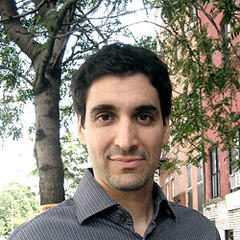
Said Sayrafiezadeh
Said Sayrafiezadeh

Said Sayrafiezadeh is an American fiction writer born in 1968. His works often focus on themes of immigration and identity, depicting individual experiences under different cultural backgrounds with delicate pen strokes. more

You May Also Like

“I sometimes have to write for a while before I figure it out, pretend that I know what I'm doing, sort of like ad-libbing on stage until you remember your line - you hope you sound convincing to the audience. The key is to have enough material, enough threads, so that there's something that can be satisfyingly drawn to a conclusion.”

“[Ending] is partly drawn from a desire to shock the audience, to brutally de-romanticize what many Americans think is happening overseas. And partly drawn from my own childhood: violence and a loss of innocence. But keep in mind that, as a writer, I'm both the criminal and the victim. I'm not trying to get out of anything easy.”

“Love and happiness inextricably combined? I wanted love stories to coincide with war stories, I wanted hope for my characters, I wanted a sense of a future. So do they. So does the reader. But perhaps I shouldn't speak for everyone when I say that love and happiness are interdependent. In my own experience, happiness came with love. Specifically, my wife. That's when my own apathy and stasis ended for good.”

“Only in an Orwellian [Barack] Obama world full of sprinkly fairy dust broken from atop his unicorn as he's peeking through a really pretty pink kaleidoscope would he ever see victory or safety for America or Israel in this treaty. This treaty will not bring peace. You don't reward terrorism. You kill it!”

“I don't think that those things [so called common practice] ever truly existed in the way that we like to believe that they do, the way we learn about them in music history class. Those things are defined at least decades after they happen. And even then, it's a fallacy because when you're in the moment, when you're in a thriving scene of musicians, inevitably everyone is going to be doing something completely different from everyone else”

“It's only when it's smoothed out by history and we try to make sense of it - this incredibly complicated period when everyone's doing something different every day - that we look for those stylistic similarities and we say, "Well, that's what that was about," and sort of forget all the other nuance. I definitely feel that that's true for this time in my community of artists, and I'm sure that it was true at other times too.”