Quotessence
Home / Quotes / Quote by Olive Schreiner

Quote by Olive Schreiner

“To us, from the beginning, Nature has been but a poor plastic thing, to be toyed with this way or that, as man happens to please his deity or not; to go to church or not; to say his prayers right or not; to travel on a Sunday or not.Was it possible for us in an instant to see Nature as she is-the flowing vestment of an unchanging reality?”

Quote by Olive Schreiner

Work

The Story of an African Farm

This novel, set in the late 19th century South Africa, delves into the lives of a family of siblings living on a rural farm. The story explores themes of growth, struggle, and the human condition through the eyes of the young characters as they navigate the challenges of their environment and society. more

Author
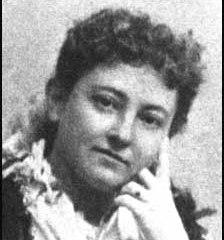
Olive Schreiner
Olive Schreiner

Olive Schreiner was a prominent South African author and feminist, born on March 24, 1855, and passing away on December 11, 1920. She is best known for her novel 'The Story of an African Farm', which is considered a classic of South African literature. Schreiner's work often focused on the social and political issues of her time, particularly the struggles of women and the plight of the indigenous people in South Africa. more

You May Also Like

“This notion that man can, and should, have absolute dominion over the "chaotic" powers of nature and woman...is what ultimately lies behind man's famous "conquest of nature" - a conquest that is today puncturing holes in the earth's ozone layer, destroying our forests, polluting our air and water, and increasingly threatening the welfare, and even survival, of thousands of living species, including our own.”

“For as long as human beings are forced to live in a system that at every turn impedes the fulfillment of their basic human needs - not only for love but for creative and spiritual expression - they will try to compensate for this in other ways, including the compulsive acquisition of ever more material goods.”

“Whatever the country, capitalist or socialist, man was everywhere crushed by technology, made a stranger to his own work, imprisoned, forced into stupidity. The evil all arose from the fact that he had increased his needs rather than limited them; . . . As long as fresh needs continued to be created, so new frustrations would come into being. When had the decline begun? The day knowledge was preferred to wisdom and mere usefulness to beauty. . . . Only a moral revolution - not a social or political revolution - only a moral revolution would lead man back to his lost truth.”

“These ways to make people buy were strange and new to us, and many bought for the sheer pleasure at first of holding in the hand and talking of something new. And once this was done, it was like opium, we could no longer do without this new bauble, and thus, though we hated the foreigners and though we knew they were ruining us, we bought their goods. Thus I learned the art of the foreigners, the art of creating in the human heart restlessness, disquiet, hunger for new things, and these new desires became their best helpers.”