Quotessence
Home / Quotes / Quote by Ralph Waldo Emerson

Quote by Ralph Waldo Emerson

Work

Select Essays and Poems

This compilation includes a diverse selection of essays and poems, offering readers a glimpse into the literary works of different authors. The essays cover a wide array of subjects and perspectives, while the poems explore various emotions and ideas through poetic expression. more

Author
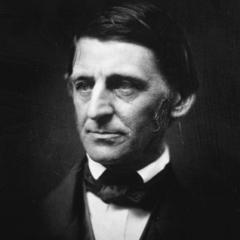
Ralph Waldo Emerson
Ralph Waldo Emerson

American essayist, poet, and philosopher. Born on May 25, 1803, and died on April 27, 1882. Known for his transcendentalist philosophy, his works have had a profound impact on literature and the intellectual world. more

You May Also Like

“One set of messages of the society we live in is: Consume. Grow. Do what you want. Amuse yourselves. The very working of this economic system, which has bestowed these unprecedented liberties, most cherished in the form of physical mobility and material prosperity, depends on encouraging people to defy limits.”

“The United Nations and the Organization of American States have named 2011 as the International Year for People of African Descent. This is an opportunity for all of us around the globe to celebrate the diversity of our societies and to honor the contributions that our fellow citizens of African descent make every day to the economic, social and political fabrics of our communities.”

“The international community cannot accept that whole communities are marginalized because of the color of their skin. People of African descent are among those most affected by racism. Too often, they face denial of basic rights such as access to quality health services and education. Such fundamental wrongs have a long and terrible history.”

“Nor was civil society founded merely to preserve the lives of its members; but that they might live well: for otherwise a state might be composed of slaves, or the animal creation... nor is it an alliance mutually to defend each other from injuries, or for a commercial intercourse. But whosoever endeavors to establish wholesome laws in a state, attends to the virtues and vices of each individual who composes it; from whence it is evident, that the first care of him who would found a city, truly deserving that name, and not nominally so, must be to have his citizens virtuous.”

“Man's characteristic privilege is that the bond he accepts is not physical but moral; that is, social. He is governed not by a material environment brutally imposed on him, but by a conscience superior to his own, the superiority of which he feels. Because the greater, better part of his existence transcends the body, he escapes the body's yoke, but is subject to that of society.”

“We can imagine a society in which no one could survive as a social being because it does not correspond to biologically determined perceptions and human social needs. For historical reasons, existing societies might have such properties, leading to various forms of pathology.”