Quotessence
Home / Quotes / Quote by Niccolo Machiavelli

Quote by Niccolo Machiavelli

“A prince, therefore, must not mind incurring the charge of cruelty for the purpose of keeping his subjects united and confident; for, with a very few examples, he will be more merciful than those who, from excess of tenderness, allow disorders to arise, from whence spring murders and rapine; for these as a rule injure the whole community, while the executions carried out by the prince injure only one individual. And of all princes, it is impossible for a new prince to escape the name of cruel, new states being always full of dangers.”

Quote by Niccolo Machiavelli

Author
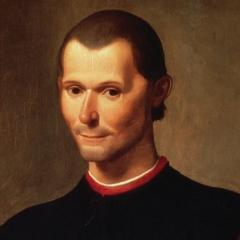
Niccolo Machiavelli
Niccolo Machiavelli

Niccolò Machiavelli was an Italian historian, political theorist, and philosopher who lived during the Renaissance. He is best known for his book 'The Prince,' which delves into the concepts of power, political tactics, and the art of rule. more

You May Also Like

“Nevertheless, he must be cautious in believing and acting, and must not inspire fear of his own accord, and must proceed in a temperate manner with prudence and humanity, so that too much confidence does not render him incautious, and too much diffidence does not render him intolerant. From this arises the question whether it is better to be loved more than feared, or feared more than loved.”

“The reply is, that one ought to be both feared and loved, but as it is difficult for the two to go together, it is much safer to be feared than loved, if one of the two has to be wanting. For it may be said of men in general that they are ungrateful, voluble, dissemblers, anxious to avoid danger, and covetous of gain; as long as you benefit them, they are entirely yours; they offer you their blood, their goods, their life, and their children, as I have before said, when the necessity is remote; but when it approaches, they revolt.”

“How laudable it is for a prince to keep good faith and live with integrity, and not with astuteness, every one knows. Still the experience of our times shows those princes to have done great things who have had little regard for good faith, and have been able by astuteness to confuse men's brains, and who have ultimately overcome those who have made loyalty their foundation.”

“Therefore, a prudent ruler ought not to keep faith when by so doing it would be against his interest, and when the reasons which made him bind himself no longer exist. If men were all good, this precept would not be a good one; but as they are bad, and would not observe their faith with you, so you are not bound to keep faith with them.”