Quotessence
Home / Quotes / Quote by W. A. Criswell

Quote by W. A. Criswell

“I believe this notion of separation of church and state was the figment of some infidel's imagination.”

Quote by W. A. Criswell

Author
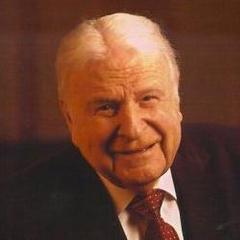
W. A. Criswell
W. A. Criswell

W. A. Criswell was a prominent American author and theologian, recognized for his contributions to Christian theology. Born in 1909, Criswell dedicated his life to shaping religious discourse in the United States. His extensive writings and teachings have left a lasting impression on the Christian community. more

You May Also Like

“I had gradually come, by this time [1839-01], to see that the Old Testament from its manifestly false history of the world, with the Tower of Babel, the rainbow as a sign, etc., etc. and from its attributing to God the feelings of a revengeful tyrant, was no more to be trusted than the sacred books of the Hindoos, or the beliefs of any barbarian.”

“With the past, I have nothing to do; nor with the future. I live now.”

“The more we know of the fixed laws of nature the more incredible do miracles become, - that the men at that time were ignorant and credulous to a degree almost incomprehensible by us, - that the Gospels cannot be proved to have been written simultaneously with the events, - that they differ in many important details, far too important as it seemed to me to be admitted as the usual inaccuracies of eye-witnesses; - by such reflections as these... I gradually came to disbelieve in Christianity as a divine revelation.”

“People who do not know the Bible well have been gulled into thinking it is a good guide to morality. This mistaken view may have motivated the "millionaire Conservative party donors". I have even heard the cynically misanthropic opinion that, without the Bible as a moral compass, people would have no restraint against murder, theft and mayhem. The surest way to disabuse yourself of this pernicious falsehood is to read the Bible itself.”

“A delusion that encourages belief where there is no evidence is asking for trouble. Disagreements between incompatible beliefs cannot be settled by reasoned argument because reasoned argument is drummed out of those trained in religion from the cradle. Instead, disagreements are settled by other means which, in extreme cases, inevitably become violent. Scientists disagree among themselves but they never fight over their disagreements. They argue about evidence or go out and seek new evidence. Much the same is true of philosophers, historians and literary critics.”