Quotessence
Home / Quotes / Quote by Viktor E. Frankl

Quote by Viktor E. Frankl

Work

The Will to Meaning: Foundations and Applications of Logotherapy

This book delves into the principles of logotherapy, a therapeutic approach that emphasizes the importance of finding meaning and purpose in life. It examines the theoretical foundations of logotherapy and its practical applications in various contexts. more

Author
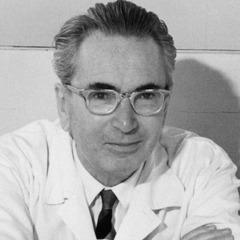
Viktor E. Frankl
Viktor E. Frankl

Viktor E. Frankl was a renowned neurologist and psychologist, born on March 26, 1905, and died on September 2, 1997. He was one of the founders of existential psychology and is known for his experiences in Nazi concentration camps and his book 'Man's Search for Meaning'. more

You May Also Like

“The freedom of speech and the freedom of the press have not been granted to the people in order that they may say things which please, and which are based upon accepted thought, but the right to say the things which displease, the right to say the things which convey the new and yet unexpected thoughts, the right to say things, even though they do a wrong.”

“What seems fair enough against a squalid huckster of bad liquor may take on a different face, if used by a government determined to suppress political opposition under the guise of sedition.”

“Truth, in its struggles for recognition, passes through four distinct stages. First, we say it is damnable, dangerous, disorderly, and will surely disrupt society. Second, we declare it is heretical, infidelic and contrary to the Bible. Third, we say it is really a matter of no importance either one way or the other. Fourth, we aver that we have always upheld it and believed it.”

“Emergency does not increase granted power or remove or diminish the restrictions imposed upon power granted or reserved. The Constitution was adopted in a period of grave emergency. Its grants of power to the federal government and its limitations of the power of the States were determined in the light of emergency, and they are not altered by emergency.”

“The very purpose of a Bill of Rights was to withdraw certain subjects from the vicissitudes of political controversy. One's right to life, liberty and property, to free speech, a free press, freedom of worship and assembly may not be submitted to vote; they depend on no elections.”

“At the heart of that western freedom and democracy is the belief that the individual man...is the touchstone of value, and all society, all groups, and states, exist for that person's benefit. Therefore the enlargement of liberty for individual human beings must be the supreme goal and the abiding practice of any western society.”