Quotessence
Home / Quotes / Quote by Lech Walesa

Quote by Lech Walesa

“When he saw injustice, he wanted to do away with it. He saw communism, and he wanted to put an end to it.”

Quote by Lech Walesa

Author
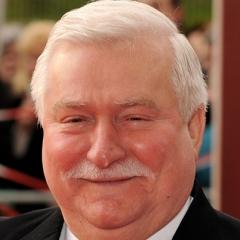
Lech Walesa
Lech Walesa

Lech Wałęsa (born September 29, 1943) is a Polish statesman, former President of Poland (1990-1995), and Nobel Peace Prize laureate (1983). He co-founded the Solidarity trade union movement, leading nonviolent resistance against communist rule. Starting as an electrician at the Gdańsk Shipyard, he organized strikes in 1980 that forced government concessions. His activism culminated in Poland's peaceful transition to democracy in 1989. As president, he oversaw economic reforms and NATO integration. Wałęsa remains a global icon for freedom and human rights. more

You May Also Like

“Our rockets can find Halley's comet, and fly to Venus with amazing accuracy, but side by side with these scientific and technical triumphs is an obvious lack of efficiency in using scientific achievements for economic needs. Many Soviet household appliances are of poor quality.”

“I want to say, and this is very important: at the end we lucked out. It was luck that prevented nuclear war. We came that close to nuclear war at the end. Rational individuals: Kennedy was rational; Khrushchev was rational; Castro was rational. Rational individuals came that close to total destruction of their societies. And that danger exists today.”

“For 40 years we were led to think of the Russians as godless, materialistic and an evil empire. When the Cold War ended, we suddenly discovered that Russia was a poor Third World country. They had not been equipped to take over the world. In fact, they were just trying to improve a miserable standard of oppressive living, and couldn't. They had to spend too much on arms build-up. We didn't win the Cold War; we bankrupted the Russians. In effect, it was a big bank exhausting the reserves of a smaller one.”

“It was man who ended the Cold War in case you didn't notice. It wasn't weaponry, or technology, or armies or campaigns. It was just man. Not even Western man either, as it happened, but our sworn enemy in the East, who went into the streets, faced the bullets and the batons and said: we've had enough. It was their emperor, not ours, who had the nerve to mount the rostrum and declare he had no clothes. And the ideologies trailed after these impossible events like condemned prisoners, as ideologies do when they've had their day.”