“As usual, it occurred to me that words were the only thing that could possibly save me from this situation. This was a characteristic misunderstanding on my part. When action was needed, I was absorbed in words; for words proceeded with such difficulty from my mouth that I was intent on them and forgot all about action. It seemed to me that actions, which are dazzling, varied things, must always be accompanied by equally dazzling and equally varied words.”
Quote by Yukio Mishima
Work
The Temple of the Golden Pavilion
The Temple of the Golden Pavilion is a novel by Japanese author Yukio Mishima, first published in 1956. It is based on the real-life burning of the Kinkaku-ji temple in Kyoto in 1950. The story follows Mizoguchi, a young man with a stutter and a deep admiration for the temple's beauty, who becomes a novice at the temple. His growing obsession with the temple's perfection and his internal conflicts with beauty, ugliness, and impermanence culminate in a dramatic and tragic decision. The novel explores themes of aestheticism, obsession, and the destructive nature of idealized beauty. more
Author
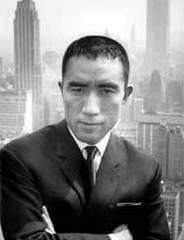
Yukio Mishima
Yukio Mishima was a Japanese author and playwright, a prominent figure in post-war Japanese literature. His works, characterized by a fusion of traditional Japanese aesthetics and modernist techniques, often explored themes of tradition, ritual, and the samurai code. more
You May Also Like
Source: Magister Ludi
“Nice people don't necessarily fall in love with nice people.”
Source: The Hiding Place
“Life is a good deal more comfortable if one doesn't expect it to be fair.”
Source: The Bargain
Source: The Bargain